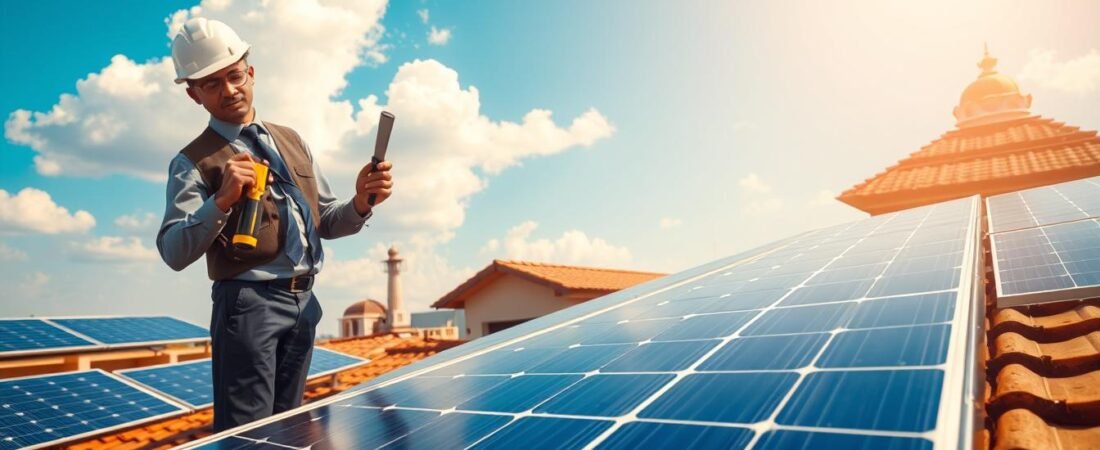
Thinking about a home energy upgrade? Many homeowners are exploring the price to install a rooftop system as a way to cut monthly electricity bills and lock in long-term savings. By 2026, average ranges for a residential setup sit between INR 1.5 lakh and INR 5 lakh or more, depending on size and component quality.
Choosing the right panels and professional setup affects both performance and resale value. Government subsidy programs can lower upfront outlay and speed payback, while proper mounting and equipment ensure steady power during grid fluctuations.
Our guide walks you through real figures, subsidy options, and tips to help you decide whether installing panels at your home is the right investment for a greener future and steady electricity savings.
Understanding the Basics of Home Solar Panel Systems
A well-designed home solar setup combines efficient modules with smart conversion gear to deliver steady electricity. This short guide explains the main parts and why they matter for your house.
Solar Panel Types
Photovoltaic modules capture sunlight and make direct current that a household can use after conversion. Modern options like Mono PERC and half-cut cells boost output on tight roofs.
High-quality panels commonly last over 25 years, giving long-term power and reliability. Many homeowners pick monocrystalline panels for higher efficiency despite a slightly higher upfront price.
Inverter Technology
Inverters turn DC into AC for appliances. Choosing between string inverters and microinverters affects performance and system sizing.
“Combine durable modules with high-performance inverters to reduce energy loss and get reliable power at home.”
| Component | Role | Typical Benefit |
|---|---|---|
| Panels | Generate DC from sunlight | Long lifespan, steady output |
| Inverter | Convert DC to AC | Improves usable electricity |
| Battery (optional) | Store power for backup | Adds resilience during outages |
- Assess energy needs first to size the system right.
- Monitoring apps let you watch production in real time.
- Proper panel installation keeps output high in varied weather.
Key Factors Influencing the Cost of Solar Panel Installation in India
What you spend to fit a generation setup depends on system size, equipment, and site work. A larger system needs more modules and stronger mounts, which raises the overall pricing quickly.
Roof versus ground matters. Ground-mounted arrays need extra materials and labor, so they usually carry higher charges than rooftop systems.
Panel choice affects performance and price. High-efficiency monocrystalline modules cost more but deliver better output on tight roofs. That can cut long-term electricity bills and increase savings.
“A detailed energy audit prevents oversizing and keeps your budget realistic.”
- Site shading or complex roofs can add design and labor expenses.
- Choosing on-grid, off-grid, or hybrid systems changes the upfront funds and future savings profile.
- Local labor rates and proximity to installers influence final figures.
| Factor | How it affects pricing | Typical impact | What to check |
|---|---|---|---|
| System size | More modules and mounts | High | Energy audit for accurate sizing |
| Mount type | Ground vs rooftop | Moderate–High | Site access and space |
| Component quality | Premium modules and inverters | Medium | Warranty and efficiency |
| Policy & subsidy | Reduces net price | Variable | Local government programs |
Breakdown of System Components and Pricing
A component-level view reveals which parts drive price and which add the most value. Below we unpack key items so you can match performance to your energy needs and budget.
Panel Efficiency Costs
High-efficiency units take a bigger share of the total spend. A 1 kW solar system commonly ranges between INR 65,000 and INR 85,000 depending on brand and quality. Choosing premium modules means fewer units for the same output.
Mounting Structure Expenses
Rooftop mounts are usually simpler and cheaper than ground frames. Ground-mounted setups need extra steel and foundations, which raises the installation cost and labor time.
Battery Storage Additions
Battery storage adds resilience and evening power but increases the initial price sharply. Prices can start near INR 20,000 and go past INR 1 lakh for larger capacities.
“Break down each line item to identify where smarter choices can lower long-term costs.”
| Component | Typical impact | Notes |
|---|---|---|
| Panels | Largest share | Higher efficiency reduces required roof area |
| Mounting | Moderate | Ground mounts cost more than rooftop |
| Battery & inverter | Variable | Choose capacity for your daily energy needs |
Tip: Plan for wiring, safety gear, and professional labor when estimating overall pricing. Modern systems are modular so you can start small and expand later.
Navigating Government Subsidies and Financial Incentives
Public financial schemes aim to lower barriers so more homeowners can switch to clean home energy.
The PM Surya Ghar Muft Bijli Yojana offers up to 40% support for systems up to 3 kW. For 4–10 kW setups, central schemes typically cover around 20%.
Applying for rooftop schemes
Register on the national rooftop portal and choose an accredited vendor. Vendors get verified and help file paperwork with the local DISCOM.
- Generation-based incentives pay based on actual energy produced.
- Net metering lets you export excess electricity and reduce monthly bills.
- State rebates and tax credits can stack with central support to improve savings.
“Careful documentation and vendor coordination speed approvals and secure subsidies.”
| Scheme | Coverage | Eligible system | Next step |
|---|---|---|---|
| PM rooftop program | Up to 40% | ≤ 3 kW | Register, vendor verification |
| Central 4–10 kW aid | ~20% | 4–10 kW | Apply via portal, submit docs |
| State rebates & GBI | Varies | Residential systems | Check local DISCOM |
Tip: Verify eligibility early. Securing a government subsidy can lower upfront cost and boost long-term investment returns for home solar panels.
The Step by Step Solar Installation Process
A successful install starts with a careful site survey that maps sun angles, shade, and roof strength. This onsite check sets the placement for maximum daily energy and long-term output.
Next, certified technicians draft a custom system layout that matches your household usage and roof specs. The design defines module count, inverter type, and wiring routes.
After design, the team procures certified components. Quality parts reduce future maintenance and help protect warranties.
Mounting follows: installers secure rails, fit panels, hook up the inverter, and run the conductive wiring to your meter. Safety protocols are used at every step to protect workers and the home.
- Testing and commissioning: performance checks, safety tests, and final adjustments before activation.
- Permits and paperwork: government-accredited vendors often help with net metering and subsidy claims.
When completed, the system starts producing clean power and cuts reliance on grid electricity. For help with trusted installation services, see professional services.
Conclusion
A well-planned home energy upgrade offers both financial return and cleaner power for years.
Companies like Bluebird Solar in Greater Noida supply certified modules with long warranties that ease homeowner worry. By using government subsidy programs and picking the right system size, you can lower initial costs and speed payback.
Solar energy helps protect households from rising electricity bills and grid shocks. Evaluate your usage and speak with reputable manufacturers to start a smart, sustainable investment for the future. For a detailed cost breakdown, see cost of solar panel installation in.