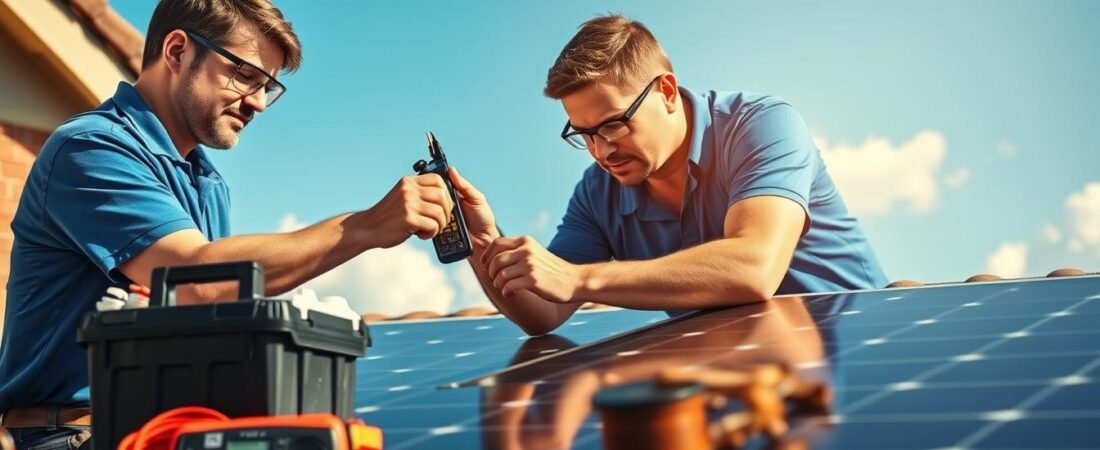
Florida Power Services has kept homes running for over 17 years. Our team helps protect your investment with practical care for rooftop systems. We focus on clear diagnostics and quick fixes to keep output high.
Homeowners trust our technicians for inverter error codes, wiring faults, battery care, and regular cleaning. We use monitoring tools to spot issues early and restore production fast.
Choosing a reliable company means fewer surprises and more steady energy at your meter. Our experts treat each job like a long-term commitment to efficiency and peak performance.
Count on our team to handle inspections, equipment checks, and any needed repairs so your system keeps saving money and runs safely for years to come.
Why Regular Solar Maintenance is Essential
Small faults add up fast—regular inspections stop minor losses from becoming big ones. In Lauderhill, where residents pay 12.21¢/kWh, every lost kilowatt-hour reduces the value of your investment.
Preserving System Efficiency
With about 237 sunny days and long peak-sun hours, your system can produce strong returns. Routine checks keep modules clean, connections tight, and inverters running at peak performance.
Protecting Your Warranty
Manufacturers often require documented upkeep to honor warranties. Regular inspections help you meet those terms and prevent gradual degradation that cuts efficiency.
- High local rates make performance losses costly.
- Federal tax credits cover initial costs, but upkeep protects long-term ROI.
- Professional systems checks reduce unexpected declines in output and power quality.
Prioritizing scheduled care preserves efficiency and keeps your home benefiting from reliable, clean energy for years to come.
Common Signs Your Solar System Needs Attention
A sudden dip in daily energy output is often the earliest sign your rooftop system needs help. Track generation on your monitoring app and note any steady declines.
Watch for these red flags:
- Lower daily kilowatt-hours than usual despite similar weather.
- Red lights on the inverter or persistent error messages.
- Visible cracks in panels, loose wiring, or scorched junction boxes.
- Unexpected increases in your electric bill that indicate underperformance.
Acting early avoids larger faults and saves money. We specialize in quick diagnostics so the correct repair is done only after the root cause is identified.
| Issue | Common Indicator | Recommended Next Step |
|---|---|---|
| Reduced output | Lower daily generation on app | Schedule a diagnostic scan |
| Inverter errors | Red lights or error codes | Check error code log and call a technician |
| Physical damage | Cracks, loose wiring, debris | Isolate the array and arrange an inspection |
| Higher bills | Monthly cost rises despite usage patterns | Compare historical output and test system components |
Professional Solar Panel Repair and Maintenance Services
A trusted crew of trained technicians delivers clear quotes and timely fixes for system faults.
Call 877-419-1024 for immediate help from our expert technicians. We respond quickly to assess performance, log inverter codes, and outline next steps.
We use a transparent quote process so you know costs before any replacement work starts. The proposal lists parts, labor, and expected timelines in plain language.
- Clear estimates: Written quote for repairs or replacement.
- Full diagnostics: Complete system checks to find root causes.
- Skilled crews: Licensed technicians handle wiring, inverters, and array issues.
Whether you need a simple check or a complex fix, our team protects your investment and restores output fast. For a free quote, visit professional repair and quote or call the number above.
Troubleshooting Inverter Error Codes and Performance Drops
Detecting the root cause of performance drops starts with inverter logs and steady monitoring of output.
Identifying Root Causes
The inverter is the heart of your solar system, converting sunlight into usable energy for the home. When error codes appear, quick diagnostics limit lost production.
We use targeted tests to trace faults in monitoring data. That helps us find communication faults, wiring issues, or failing components fast.
Our crew handles inverter repair replacement and inspects connections between the inverter and the main service. This approach restores peak performance with minimal downtime.
| Error Code | Likely Cause | Quick Action | When to Call |
|---|---|---|---|
| E01 – No Comm | Network or gateway fault | Restart gateway, check logs | If reconnect fails |
| E12 – Low AC | Grid voltage drop or wiring | Verify service voltage | If persistent or repeated |
| E20 – Overtemp | Ventilation or shading | Clear debris, cool unit | If temps stay high |
Battery Storage Care and Optimization
Proper care of your battery bank keeps stored energy ready when the grid falters.
Clean connections and correct fluid levels prevent energy loss and save money over time. Dirty or loose terminals can cut output and reduce lifespan.
Our team uses hydrometers to check specific gravity safely. These readings show charge balance and spot failing cells before they cause larger faults.
Do not handle battery fluid alone. The electrolyte is highly irritative. Only trained technicians with protective gear should open or service cells.
- Regular inspections help your battery systems reach at least ten years of useful life.
- We optimize charging settings so stored energy is efficient and reliable.
- Safe handling and testing reduce the risk of costly replacements and keep your system producing.
Routine attention to battery storage protects your investment and improves home power independence. Schedule a professional check to prevent surprises and keep your system working well.
Managing Solar Panel Removal for Roof Repairs
A proper removal and storage plan ensures your installation returns to service with no surprises. When the roof needs work, the roof crew and our team coordinate to protect your home and equipment.
Safe Removal and Storage
We carefully uninstall panels and label wiring so each module can be reinstalled without confusion. Poor flashing during original installation is the most common cause of roof leaks, so we inspect all penetrations.
- We remove modules with trained technicians who follow safety protocols.
- Components are stored securely on-site or in a climate-controlled area.
- All fasteners are cataloged to speed reinstallation and reduce replacement needs.
Reinstallation and Testing
After roofers finish, we use new flashed mounting feet and stainless hardware during reinstallation. This prevents leaks and strengthens the roof-to-system connection.
Then we run full diagnostics and monitoring to verify output and performance. If any replacement components are needed, we include that in a clear quote so homeowners can approve work today.
The Importance of Professional Solar Cleaning
Dirt, dust, and salt build-up quietly shave away hours of usable power. Left unchecked, grime reduces light transmission and cuts efficiency.
Professional cleaning uses deionized water with soft-bristle tools to clear glass and frames without harming seals. That method restores peak output while protecting roof fixtures.
Skipping routine care leads to steady performance loss and higher bills over time. Regular attention preserves long-term value and avoids early replacements.
- Removes pollen, dust, salt and bird debris.
- Prevents hot spots and uneven generation.
- Protects warranties by following best practices.
| Task | Frequency | Benefit |
|---|---|---|
| Visual inspection | Annually | Spot dirt, damage early |
| Gentle wash with deionized water | 6–12 months | Restores energy output |
| Post-storm check | After severe weather | Protects performance |
Choose pro cleaning to keep panels efficient, safe, and producing at their peak.
Addressing Electrical and Wiring Faults
Electrical faults hidden under roof sheathing can silently cut production and create fire risk.
Ensuring Code Compliance
Safety and code adherence are our top priorities. Every repair follows local building rules and NEC standards.
We inspect conduit, combiner boxes, and junctions to spot corrosion, crushed wiring, or poor connections from past installation work.
- We specialize in fixing electrical faults so your whole system runs reliably.
- Damaged conduit or a failing combiner box can compromise output; our trained crew restores safe connections.
- Hidden wiring issues from roof damage are diagnosed with visual checks and thermal scans.
- From a simple wire repair to a full component replacement, we test the inverter and main electrical paths before closing a job.
| Issue | Common Sign | Immediate Action |
|---|---|---|
| Corroded conduit | Arcing or visible rust | Isolate circuit and replace conduit |
| Loose junctions | Intermittent output | Tighten connections and retest |
| Combiner box failure | Burn marks or tripped breakers | Replace components and verify grounding |
Choose a pro service to ensure code-compliant work and long-term peace of mind for your home and system.
The Solar Repair Process
We start with a thorough on-site scan to find error codes and low production causes. This focused diagnostic visit uses monitoring logs and visual checks to pinpoint the exact fault.
Upfront pricing lets you decide with confidence. The initial visit is $550 and includes travel plus the first hour of labor. Additional labor runs $115 per hour.
Most jobs are finished in one visit. If a second trip is needed—for example, an inverter replacement—we charge a $350 return fee. Properties over 60 miles from Tampa incur a $175 extended drive surcharge.
Our expert team handles inverter swaps, battery troubleshooting, panel cleaning, monitoring checks, and any needed replacement parts. We verify output and confirm performance is restored before we leave.
| Fee | What it Covers | When Applied | Notes |
|---|---|---|---|
| $550 | Travel + first hour labor | Initial diagnostic visit | Written quote provided on-site |
| $115/hr | Additional labor | Onsite or remote diagnostics | Billed by time after first hour |
| $350 | Return visit | Second trip (e.g., inverter swap) | Charged when parts/repair need revisit |
| $175 | Extended drive | Over 60 miles from Tampa | Adds to initial fee if applicable |
To schedule a diagnostic and get a clear written quote, schedule a quote with our team today. We aim to restore production and efficiency quickly while keeping communication clear.
Why You Should Avoid DIY Solar Repairs
Climbing onto a roof to tinker with live wiring is a risk no homeowner should take. Falls and contact with high-voltage parts cause serious injury and can damage your equipment.
Attempting your own inverter fixes or module swaps may seem like a way to save money. In truth, incorrect work often voids warranties and leads to larger costs later.
Our company has trained technicians who use the right tools, safety gear, and testing procedures. They handle monitoring, electrical diagnostics, and complex systems so the job is done correctly the first time.
Protect your investment by choosing qualified pros. That keeps your roof intact, preserves warranty coverage, and prevents costly mistakes that waste time and money.
“Let a trained crew handle high-voltage repairs — it’s safer and smarter for your home.”
- Roof work and wiring require specialized equipment and training.
- Incorrect fixes can lead to reduced power, fire risk, or voided warranty.
- Professional service restores performance and protects long-term value.
Conclusion
, A well-tended system returns more energy and lasts far longer. Routine checks protect your investment and keep rooftop output steady.
Address inverter faults, panel wear, or wiring issues quickly to extend life and cut bills. Our crew offers prompt repair and scheduled maintenance to prevent costly failures.
We deliver expert services that restore performance and maintain safety. Contact our team today to schedule a visit and keep your panels ready to perform at their best.