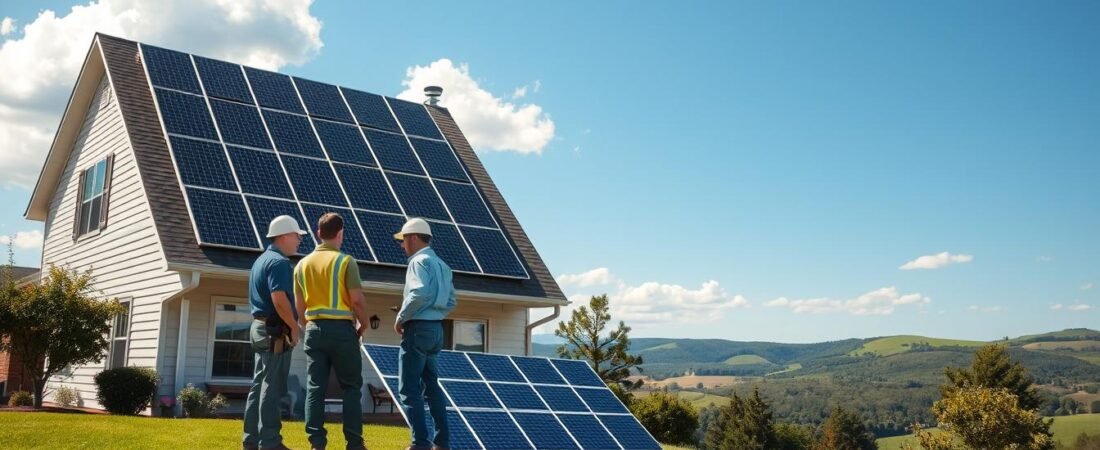
Ready to take control of your energy? This short guide walks homeowners and small businesses through the essentials of moving toward clean, renewable power. Virginia ranks ninth in the nation for growth, so now is a smart time to learn how scalable systems can fit roofs and larger sites alike.
We keep things simple. You will find clear steps to assess needs, compare modern equipment, and weigh professional help. The goal is to cut grid dependency and boost long-term savings without guesswork.
Expect practical tips on choosing the right size, understanding incentives, and working with experienced crews. By the end of this section, you’ll know the basic options for installing panels and how to plan your path toward reliable, cost-saving energy solutions.
Why Virginia is a Prime Location for Solar Energy
Good daylight hours and rising utility costs make local conditions favorable for adopting clean power.
Peak Sun Hours
The state averages about 4.25–4.75 peak sun hours per day, which is enough to generate meaningful renewable energy for homes and businesses.
That adds up to roughly 215 sunny days per year, giving systems reliable output across seasons.
Rising Electricity Rates
Average electricity runs near 14¢/kWh today. Many households find that switching to clean power can cut monthly bills.
Programs and incentives from the state encourage adoption and lower upfront cost. And frequent outages—about 10 hours on average in 2023–2024—make local generation appealing to anyone worried about grid reliability.
- Good sun hours make installations productive.
- Competitive rates shorten payback for many projects.
- State programs and incentives support homeowners and businesses.
Understanding the Costs of Solar Panel Installation Virginia
Costs vary widely, so a good estimate starts with your current electricity use and roof suitability. A typical homeowner in the area pays about $188 per month for electricity. That figure helps test payback timelines for renewable energy upgrades.
Upfront costs depend on home size, equipment choices, and whether you add battery storage. Integrating battery storage gives backup power during outages and raises the value of your energy systems.
Think long term: installing solar panels is not just a purchase; it can boost property value by up to 4%. To understand total costs, review your monthly energy use, check roof shading and orientation, and compare quotes from licensed crews.
- Upfront price depends on system size and tech selected.
- Average $188 monthly bill can be offset by clean power generation.
- Battery options add resilience and value to your homes.
Careful planning reduces surprises. A clear assessment makes installing solar panels a practical investment in long-term energy savings.
Financial Incentives and Tax Credits for Homeowners
Financial incentives make it far easier for homeowners to justify a switch to home-based renewable energy.
Federal Tax Credit: The federal tax credit allows a 30% deduction on the cost of a residential PV system. That credit applies directly to your federal tax bill.
How the Credit Changes Your Math
For example, a $20,000 system drops to $14,000 after the 30% federal tax credit. That reduction cuts initial out-of-pocket costs and shortens payback times for many homeowners.
State-level programs further lower expenses. Many local rebates and incentive programs make installations more accessible and budget-friendly.
- Claim the 30% federal credit to reduce upfront costs quickly.
- Combine federal and state programs to maximize savings.
- Keep detailed installation records to support tax claims and local rebates.
“Proper documentation is required to claim the federal tax credit and any additional state-specific incentives.”
See a helpful list of state rebates and incentives that apply to homeowners in the area. Use those resources when you compare quotes and plan financing.
How Net Metering Works for Your Property
Net metering turns surplus daytime generation into credits on your monthly bills. When your system produces more energy than you use, utilities record the excess metering as a credit you can spend later.
Credits are applied when production drops, such as at night or on overcast days. This balancing reduces grid electricity purchases and helps your property act like a small, local generator.
Most utilities offer net metering programs, so check with your provider to learn how credits are tracked and applied. Combining credits with modest battery storage can smooth usage across hours and improve savings.
| Action | What the Utility Tracks | What You Receive | Typical Impact |
|---|---|---|---|
| Daytime surplus | Exported energy (kWh) | Credit on next bill | Lower monthly bills |
| Night or cloudy | Imported energy (kWh) | Use credits to offset usage | Less grid electricity needed |
| Annual reconciliation | Net value for year | Carryover or payout per utility | Improved return on investment |
“Net metering helps stabilize local grids by encouraging distributed generation.”
Exploring Solar Renewable Energy Credits
Renewable energy credits turn the clean electricity your system makes into a tradable asset. For every 1,000-kWh generated, you earn one SREC that can be sold to buyers in the market.
Utilities often purchase these credits to meet state mandates. That creates demand and a price signal that can add income to your property over time.
Trading platforms like SRECTrade simplify the process for owners. They list credit offers, handle certification, and execute sales so you can monetize benefits without deep market knowledge.
- Earn: One credit per 1,000 kWh of clean energy produced.
- Sell: Utilities and other buyers purchase credits to meet obligations.
- Trade: Use platforms to find the best price and reduce paperwork.
| What it Is | Who Buys | How You Benefit | Market Risk |
|---|---|---|---|
| SREC (1 per 1,000 kWh) | Utilities and compliance buyers | Extra income, shorter payback | Prices change with supply and demand |
| Registered credit | Private traders and aggregators | Flexible selling options | Value can vary by state rules |
| Trading platform service | Market participants | Convenience and verified sales | Timing affects revenue |
“Monitor market prices and enroll in the right program to maximize returns.”
Navigating Financing Options and Solar Agreements
A clear financing plan helps you weigh monthly cash flow against long-term ownership benefits.
Two common routes are loans and power purchase agreements (PPAs). Each changes how you pay and who owns the equipment.
Solar Loans
Loans let you own the systems. You make monthly payments and claim tax credits and other benefits. Ownership usually increases home value and maximizes long-term savings.
Power Purchase Agreements
PPAs let customers use solar power with little or no upfront cost. A third party owns the equipment and sells electricity to you at an agreed rate. This reduces initial costs but limits ownership benefits.
How to choose:
- Match financing to cash flow and credit profile.
- Compare how each option affects monthly electricity bills and long-term savings.
- Ask local utilities and lenders about flexible programs and incentives.
Consulting a professional like Solar SME can clarify options and help you negotiate terms that fit demand and budget.
“Pick the plan that balances short-term affordability with long-term benefits.”
| Option | Who Owns | Upfront Costs | Long-term Benefits |
|---|---|---|---|
| Solar Loan | Homeowner | Moderate to high | Tax credits, higher savings, increased value |
| Power Purchase Agreement | Third party | Low or none | Immediate bill reduction, limited ownership gains |
| Utility/Lender Programs | Varies | Flexible | Matched to customer needs and local incentives |
Essential Considerations Before Starting Your Installation
Taking a few practical steps up front prevents delays and protects the long-term performance of your systems.
First, inspect your roof for age, rot, or loose shingles. A sound roof avoids extra costs later and ensures the equipment sits on a stable base.
Confirm property tax rules. In this state, solar panels are exempt from property tax, so your investment typically won’t raise local tax assessments on your homes.
Consider battery storage to keep power flowing during extreme weather or grid interruptions. Adding a battery gives reliable backup and preserves critical loads.
Safety matters: always verify your installer follows the NEC 2023 solar code. That code protects wiring, grounding, and system longevity.
Ask the utility for an assessment. A professional review shows if your property has the right orientation and service capacity for efficient panels and equipment.
| Consideration | Why It Matters | Action |
|---|---|---|
| Roof condition | Supports weight and attachment points | Repair or replace before work begins |
| Property tax exemption | Protects home value from higher assessments | Confirm local rules and document purchase |
| Battery storage | Provides backup during outages and weather events | Compare battery sizes and warranties |
| NEC 2023 code compliance | Ensures safe, code-compliant wiring and mounts | Request proof of compliance from installer |
| Utility assessment | Optimizes orientation and interconnection | Schedule a site review with your utility |
“Confirming roof integrity, tax status, storage needs, and NEC compliance keeps your project on schedule and safe.”
Protecting Your Investment Against Common Scams
Protecting your investment starts with simple checks and a healthy dose of skepticism. Don’t rush into deals from door-to-door salesmen who push fast signatures or big promises.
Always research the company offering your equipment and installation. Look for licenses, local reviews, and written estimates that list warranties and timelines.
Verify credentials and ask about product standards. Quality panels and mounts should meet local safety codes for your property and power needs.
- Avoid high-pressure tactics and unclear contracts.
- Confirm that the equipment has verifiable warranties.
- Ask for references and confirm past work with customers.
Be careful with overly optimistic tax claims—if a promise sounds too good to be true, it may be a red flag. Trusted providers like Solar SME put safety and clear pricing first.
“Take time to vet providers and save yourself time and money later.”
For practical scamming tips, see this helpful guide on spotting fraud: scamming tips.
Conclusion
In summary, switching to distributed generation can bring clear savings and peace of mind. The main benefits include lower monthly expenses and greater resilience during outages.
Think of your project as a long-term investment. Use tax credits, net metering, and SRECs to boost returns and shorten payback.
Homeowners should research options, compare vetted installers, and read warranty terms carefully. That protects value and performance.
We advise customers to plan, ask for references, and verify permits before moving forward. Those steps help secure lasting energy independence and guard against rising utility costs.