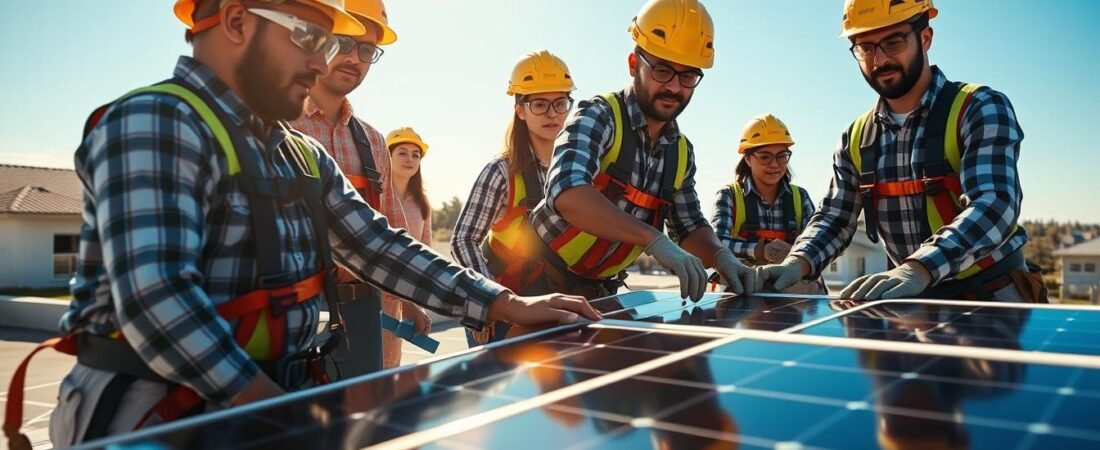
Taking on a DIY renewable energy project is rewarding, but it calls for clear planning and the right gear. In 2024 a new system was added every 54 seconds in the United States, so knowing how to protect yourself matters more than ever.
Before you begin any installation, make sure you have a concise list of protective equipment. A helmet and insulated gloves are essentials that cut the risk of falling objects and electrical shock.
Understand the basic systems and energy flow so you can spot hazards early. Follow manufacturer precautions and seek short training if you feel unsure. Proper PPE and a bit of knowledge go a long way toward safer installations.
Remember: treat live power sources with respect, use approved protective equipment, and double-check connections. These steps reduce risk and help your project finish strong and secure.
Essential Preparation for Your Solar Project
Begin with a detailed site check to map obstructions, confirm roof load capacity, and plan safe access routes. A short survey helps you place equipment logically and avoid surprises during work.
Conducting a Thorough Site Assessment
Walk the rooftop to note clearances, ridge setbacks, and shading. California code requires modules to be at least three feet from the ridge to allow firefighter access, so mark those zones.
Inspect the structure for damage or weak spots. Check that rafters and decking can support the added weight of panels and racking.
Reviewing Manufacturer Safety Manuals
Unpack and inspect every component before you mount anything. Look for shipping damage like scratches or bent frames and document issues.
Place inverters where airflow meets the maker’s cooling requirements. Also plan for external disconnect switches and OCPDs—those are installer responsibilities.
| Item | Check | Why it matters |
|---|---|---|
| Rooftop structure | Load capacity & clearances | Prevents collapse and meets local codes |
| Inverter location | Ventilation & access | Ensures optimal performance and serviceability |
| Components & wiring | Damage, completeness, labeling | Reduces faults and eases final connection |
| Permits & approvals | Local power operator sign-off | Required before grid connection |
- Plan rooftop layout so systems meet fire and building requirements.
- Organize parts and wiring to speed work and limit errors.
- Make sure you have required approvals before connecting to the grid.
Mastering Solar Panel Installation Safety
A confident DIY crew begins by mastering how to handle heavy modules and live wiring before any rooftop task.
“Treat every connection as energized until proven otherwise.”
Proper knowledge reduces risk. Learn the electrical basics and the right mechanical techniques. Two people should lift each module to share weight and lower strain.
Cover modules with an opaque sheet during setup to limit heat buildup. Hot surfaces increase burn and handling hazards.
Fall prevention must be central. Nearly 38% of construction deaths relate to falls, slips, and trips. Use a body harness and clear walkways.
- Take formal training before working on rooftop systems.
- Assume wiring is live and use insulated tools.
- Set up fall protection and lift with teammates every time.
Regular maintenance and cautious practices keep the system productive and protect your crew over time.
Mitigating Electrical Hazards and Shock Risks
Control of live circuits is the top priority. Rapid steps and the right devices reduce danger when working near DC power and inverters. Follow code and use tested parts to lower the chance of shock and fire.
Implementing Rapid Shutdown Systems
The 2017 NEC 690.12 requires rapid shutdown both inside and outside the array boundary. Use listed rapid shutdown devices that drop voltage to safe levels within 30 seconds of an emergency.
Preventing Arc Faults
The NEC 690.11 mandates protection for PV systems at or above 80 V DC. Install a listed PV AFCI or equivalent. These devices detect dangerous arcing currents and disconnect circuits before fires start.
Managing Arc Flash Risks
An arc flash can release intense heat and radiant energy—temperatures can reach 35,000° F. NFPA 70E requires an arc flash risk analysis and PPE for DC systems over 100 V. Treat high-voltage inverters with caution and plan work procedures before touching components.
| Hazard | Code / Standard | Required Device / Action | Expected Outcome |
|---|---|---|---|
| Live array voltage | NEC 690.12 | Rapid shutdown device (listed) | Voltage reduced inside/outside boundary in ≤30s |
| Arc faults | NEC 690.11 | PV AFCI or equivalent | Arcing detected and circuit opened to prevent fire |
| Arc flash | NFPA 70E | Hazard analysis and PPE for >100 V DC | Worker protection and reduced burn risk |
| Shock from conductive parts | National grounding practices | Proper bonding and grounding conductor | Leakage faults routed to ground; reduced electrocution risk |
In addition, always bond metallic components to the grounding electrode conductor. Label wiring and keep wiring runs tidy. These simple steps meet requirements and offer strong protection for anyone working on a solar energy system.
Best Practices for Rooftop and Ladder Safety
Preventing falls begins at ground level: position and secure your ladder before you go up. Use a ladder that extends at least 3 feet above the rung you will stand on. Place it on dry, level ground and keep it at least 10 feet from overhead power lines.
Fall Prevention Strategies
Choose the right gear. Fiberglass ladders with non-conductive side rails are safer near power and electrical equipment than metal models. When work is six feet or higher, install guardrails around ledges, skylights, and sunroofs.
Secure the ladder to the ground or rooftop to stop slipping. Make sure your work area stays clear of debris so trips and falls are less likely when moving heavy panels or components.
- Position ladders correctly to provide a stable base for the work.
- Wear appropriate PPE and a body harness for rooftop protection.
- Fasten the ladder and check footing each time you climb to reduce risk.
Take time to verify anchors and guardrails before you lift anything onto the roof. These small steps keep the crew safe and help the entire system perform without incident.
Choosing the Right Testing Equipment
Good test equipment is the single best defense against measurement errors and accidental shorts. Pick meters and leads that match the voltage and category rating of your system before you begin any checks.
Use CAT III or CAT IV rated devices where required. At altitude, air is less dense and breakdown voltages drop, so high-category gear is essential. The Fluke 393 FC True-RMS Clamp Meter is the only CAT III 1500 V / CAT IV 600 V TRMS clamp meter made specifically for these tasks.
Always replace high-energy fuses with the same quality and amperage rating to keep faults contained. Retractable probes or probe tip covers reduce the chance of accidental metal-to-metal contact and short circuits during testing.
Maintain your tools and ppe, and follow the manufacturer’s list of recommended equipment for your components. Refer to NFPA 70E Table 130.7(C)(15)(c) for appropriate arc-rated clothing when working near high-voltage inverters.
- Make sure test leads and meters are rated for the expected voltages.
- Keep tools in good repair and replace worn parts immediately.
- With proper training and quality tools, you can verify systems with confidence.
Conclusion
Close out your DIY work with a final round of checks that focus on risks and reliability. Do a walk-through of equipment, wiring, anchors, and labels. Confirm that each part of the system is secure and that roof access remains clear.
Prioritizing safety helps prevent falls and electrical harm. Follow the best practices in this guide and keep training current. For extra context, review the industry health and safety report here: health and safety review.
With good planning, proper tools, and steady attention, your solar installations can deliver long-term energy and power savings while protecting your home and family.