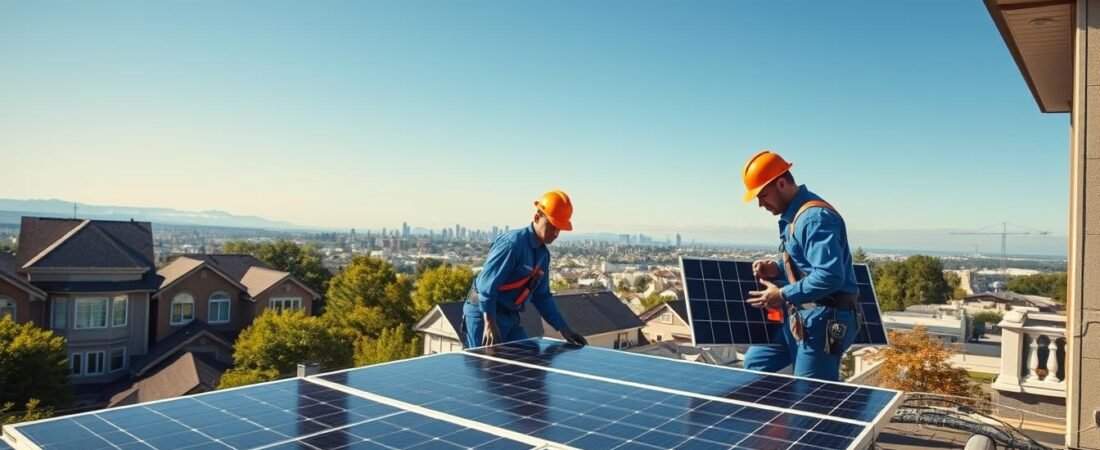
GreenSavers has won the U.S. EPA’s ENERGY STAR Contractor of the Year Award eight years in a row. This recognition shows our commitment to quality and reliable energy solutions for local homes.
Our team helps Portland homeowners cut their carbon footprint by switching to clean power. We design each system for Oregon’s climate so your home stays comfortable and efficient.
Every installation gets careful planning and advanced technology. Our experts focus on long-term performance, steady utility savings, and a smooth service experience for you.
Request free consultations to learn how professional services can turn your property into a sustainable asset. We handle each project with precision and care to ensure strong results for years to come.
Professional Portland Solar Panel Installation Services
GreenSavers delivers expertly designed systems that turn rooftops into dependable home energy sources. We combine award-winning experience with clear planning to give lasting results.
Our certified crew installs each solar panel system to meet strict safety and efficiency standards. We use advanced solar power technology to help homes get the most energy through seasonal changes.
From permit to final hookup, our team manages the full process. We integrate new panels with your electrical setup to ensure smooth operation and long-term durability.
Clients gain greater energy independence and reduced reliance on utilities. Our services focus on performance, consistent savings, and ongoing support from experienced technicians.
- Certified workmanship and code compliance
- Durable materials and proven equipment
- Full-service project management and support
| Feature | Benefit | Expected Outcome |
|---|---|---|
| ENERGY STAR award recognition | Trusted workmanship | Reliable long-term performance |
| Advanced system design | Optimized energy output | Higher seasonal production |
| Full integration services | Seamless electrical hookup | Immediate, safe operation |
| Ongoing support | Warranty and maintenance | Consistent value over time |
Why Solar Energy is Ideal for Oregon Homes
Oregon’s climate gives homes dependable sunlight that translates into meaningful energy savings. With about 144 sunny days a year, households can tap a steady resource for cleaner power.
Annual Sunshine Potential
Those 144 days create reliable windows for generating electricity. Even with cloudier seasons, modern systems harvest diffuse light well.
Renewable Energy Growth
In the last decade, renewables became the state’s fastest-growing source of electricity, now powering roughly 170,000 homes.
By installing solar, homeowners join a statewide movement that cuts bills and boosts local sustainability.
- Local evaluation: We assess your roof and orientation to optimize output.
- Long-term value: Upfront investment locks in lower monthly power costs.
| Metric | Value | Impact |
|---|---|---|
| Sunny days | 144 days/year | Consistent generation potential |
| Homes powered | ~170,000 | Proven regional adoption |
| Result | Lower bills & cleaner power | Stronger energy independence |
Understanding the Environmental and Financial Benefits
Generating electricity at home turns a utility cost into a lasting financial asset.
Today, solar installations cut roughly 136 million metric tons of carbon each year — like planting 2 billion trees. This shows clear environmental benefits for households and the wider community.
Creating your own electricity also lowers monthly bills. Many homeowners find the long-term savings make going solar a smart investment.
Modern systems add resilience. They help protect your home from frustrating power outages and reduce reliance on the traditional grid.
Low upkeep is another advantage. With routine maintenance, a system can deliver consistent renewable energy for over 20 years with little daily attention.
| Benefit | Impact | Typical Result |
|---|---|---|
| Carbon reduction | 136M metric tons/year | Cleaner air, lower emissions |
| Financial savings | Reduced electricity bills | Faster payback, higher home value |
| Reliability | Backup during outages | Lights stay on when grid fails |
| Maintenance | Low, routine care | 20+ years steady power |
The Step by Step Installation Process
Getting a new home energy system is straightforward when each step is mapped out in advance. Our timeline normally spans two to three months from signed proposal to completed project. That schedule keeps work efficient and predictable.
Initial Consultation
We begin with a free consultation to assess your roof, usage, and costs. You receive a preliminary estimate that shows expected savings and payback.
System Design
Our designers create a tailored plan so the solar panels capture maximum daylight. As an Energy Trust trade ally, we also identify cash incentives to lower upfront costs.
Final Installation
Certified crews handle site inspection, permits, and safe hookup. After activation you should see an immediate drop in electricity bills while we process incentive paperwork.
- Clear timeline: 2–3 months to completion
- End-to-end services: from consultation to final activation
- Incentive support: help accessing Energy Trust cash rebates
Navigating Permits and Structural Requirements
Permits and structural checks are the foundation of any safe rooftop power project.
Proper permitting protects your home and ensures the system meets local building codes. Expect a permit approval window of about three to seven weeks from the City before work begins.
Structural Engineering Standards
A licensed structural engineer must sign or stamp any drawings that show load paths, roof attachments, or framing changes. These stamped documents confirm the roof will safely support the added weight and wind loads.
We handle the permitting process for you. That includes producing to-scale site plans with clear lines and contrast for official scanning.
- We coordinate with the Bureau of Development Services to secure approvals.
- Our team files paperwork, obtains signatures, and tracks permit status.
- This reduces delays and keeps your project on schedule.
| Requirement | Typical Timeframe | Outcome |
|---|---|---|
| Permit approval | 3–7 weeks | Legal clearance to begin |
| Engineer stamp | Concurrent with design | Verified structural safety |
| To-scale plans | Provided by our team | Accepted by scanning and review |
By managing these steps, we make the move to clean home energy smooth and stress-free. Your system will be safe, code-compliant, and approved for operation.
Financial Incentives and Tax Credits
Federal and local programs make a home energy upgrade far more affordable than many homeowners expect.
The federal investment tax credit lets you deduct 26% of your total installation costs in the same tax year.
Oregon residents can reduce costs by up to 50% when combining Energy Trust cash incentives with state rebates. Many customers also get upfront rebates such as $1,200 from Portland General Electric or $900 from Pacific Power to offset initial expenses.
We provide access to flexible financing so installing solar or a solar panel system feels affordable. Our team helps you claim rebates, apply tax credits, and pick the best financing option.
Bottom line: stacking the federal tax credit, local rebates, and smart financing can cut net costs dramatically and lower monthly electricity bills.
For a clear list of local programs and next steps, see the Portland incentives page and contact our team to get started.
How Net Metering Works for Portland Residents
Net metering lets homeowners turn surplus daytime generation into bill credits they can use all year.
When your solar panels produce more electricity than you use, the extra power is sent to the grid. Your utility then credits that excess output to your account.
Those credits offset your winter usage, so you pay less in monthly bills. This banking of energy is especially valuable in months with low production.
Connecting your system to the grid also keeps your home powered when panels are not producing at peak levels. It acts as a virtual battery without onsite storage.
We explain how your meter and account will track credits. Our crew verifies the connection so credit tracking and billing adjustments work smoothly.
| Feature | Benefit | What to Expect |
|---|---|---|
| Grid export | Earn credits for excess power | Lower winter bills |
| Credit rollover | Bank summer generation | Use credits during cloudy months |
| Utility coordination | Seamless billing | Clear monthly statements |
| Reliability | Reduced impact from power outages | More consistent household power |
Net metering is a practical way to maximize the value of your solar panel and system while keeping costs down.
Choosing the Right Solar Contractor
A trusted contractor makes the difference between a smooth project and costly delays. Choose a team that pairs technical skill with clear communication and strong customer service.
Importance of Trade Ally Certification
Working with an Energy Trust trade ally gives you access to cash incentives and rebates. GreenSavers holds a 3-star rating from the Energy Trust of Oregon, the highest score for customer service and quality.
Customer Satisfaction Guarantees
We offer a 100% satisfaction guarantee on every solar panel installation and system service. Our B Corp certification shows we meet strict environmental and social standards.
Request free consultation from professional energy consultants to review cost, incentives, and maintenance plans. We tailor energy solutions—ownership, loans, or PPAs—to fit your budget and goals.
- Free consultation: evaluate home needs and projected savings
- Trade ally access: streamlined incentives and rebates
- Customer service: dedicated support from proposal to maintenance
Integrating Solar with Home Energy Upgrades
A coordinated upgrade of your home’s envelope and power source yields the biggest long-term savings.
Most clients who add a solar panel also ask us to tighten insulation, replace windows, or upgrade HVAC. These moves reduce demand so a smaller system can meet more of your electricity needs.
We offer a comprehensive home energy assessment that compares options: install solar, add a heat pump, or prioritize air sealing. That review shows where upgrades deliver the best return.
Combining generation with efficiency raises comfort and cuts bills. A retrofit that pairs panels with insulation and smart controls moves you closer to net zero.
- Holistic planning: we align the system with insulation and HVAC
- Maximized savings: lower energy use means more of your power comes from onsite generation
- Long-term value: fewer utility costs and greater home comfort
Ready to evaluate your options? Learn whether going green is a smart investment for Oregon and how a full retrofit can cut reliance on traditional electricity.
Conclusion
A well-designed home energy system turns sunlight into steady savings and greater resilience. Our certified solar installer team plans each solar panel installation to match your roof, budget, and long-term goals.
Going solar delivers clear benefits: lower bills, reduced emissions, and greater energy independence. We offer full services from design to activation, plus straightforward maintenance plans to keep performance high.
Request free consultation to review incentives, expected savings, and the best timeline for your project. Contact our team today to start your service and enjoy clean, reliable solar power for years to come.