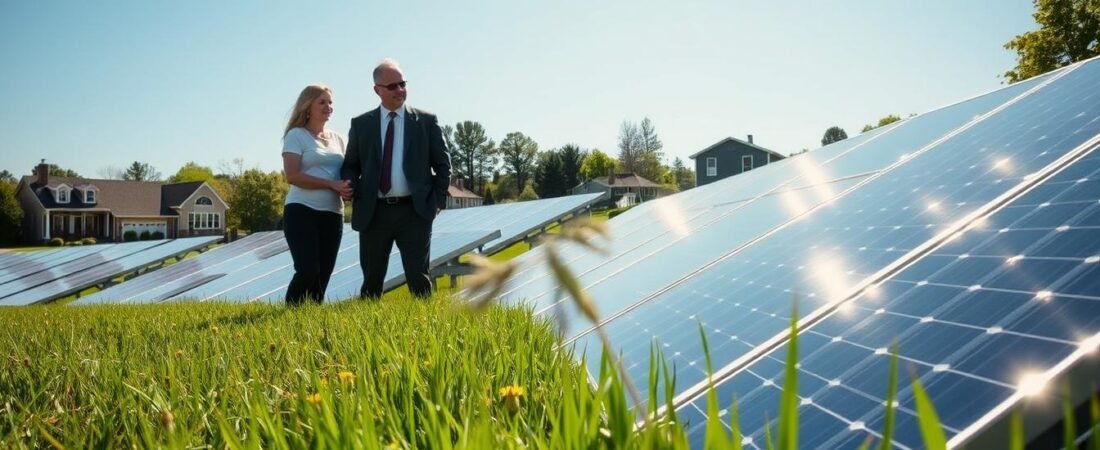
Thinking about rooftop generation? This short guide gives a clear starting point. As of April 2026, the average system price in Middletown, CT is $2.70 per watt installed. That figure helps you plan a realistic budget for your home.
Rising utility rates make predictability valuable. Installing a home system can lock in a steady energy price and reduce your monthly electric bill over time.
What to watch: look at the total system price before incentives, and pick durable equipment that lasts 25–30 years. Our guide will help you compare offers and get the best value for your investment.
Understanding Solar Panel Cost Middletown
Most homeowners here see an up-front estimate around $31,201 for a full system. That number represents the gross price before any state or local rebates are applied.
What affects that price? Equipment choice, labor, permitting, and site work shape the total. High-efficiency brands such as QCells or REC tend to raise the hardware line item, but they also improve long-term energy output.
Comparing quotes matters. Look for clear breakdowns that show module costs, inverters, mounting hardware, and installation labor. Transparent bids make it easier to compare local offers and spot hidden fees.
- Average range: about $26,521 to $35,881 depending on system size and equipment.
- Ask installers for an itemized estimate so you see panel cost, labor, and permit fees.
- Start with a local service review and get at least three proposals — or visit our services page for help.
Factors Influencing Your Total Investment
Your total investment depends first on the system size you choose and how you use electricity. Small changes in capacity change the overall price quickly, so plan with real usage data.
System Size Requirements
Average benchmarks help. The average system size in Middletown, CT is 11.58 kW, which is a useful starting point when comparing offers.
A 5 kW system typically runs about $13,476. Using a per watt metric makes it easier to compare proposals and see how a larger panel system scales.
- Doubling capacity generally doubles the price, assuming similar equipment.
- Ask installers for a clear per watt line to compare panels cost across bids.
Energy Consumption Patterns
Look at a year of electric bills to size the system so it offsets most of your monthly usage. Seasonal swings matter; summer cooling or winter heating can change needs.
“Match system capacity to your actual energy draw to avoid overspending on unused generation.”
Tip: Use historical usage and a local output estimate to choose a system that fits both your budget and goals.
Average Pricing for Residential Systems
Comparing recent bids shows clear price bands based on system size and equipment tier. This helps you set a realistic budget before requesting quotes.
Typical retail figures: a 10 kW solar panel system runs about $26,953. A mid-range 7 kW option is roughly $18,867, while a smaller 3 kW setup comes in near $8,086.
Use the per watt line to compare value. The figure you ‘ll pay changes with roof complexity and selected equipment. Competitive bids often trim the panels cost for consumers.
- Compare quotes on a per watt basis to spot the best deal.
- Ask for itemized estimates so you see panel cost, inverter, and labor.
- Match system size to your energy needs to avoid overspending.
| System Size | Estimated Price | Approx. $/W |
|---|---|---|
| 3 kW | $8,086 | $2.70 |
| 7 kW | $18,867 | $2.70 |
| 10 kW | $26,953 | $2.70 |
Tip: Knowing average system costs lets you budget and compare offers faster.
Financial Benefits and Long-Term Savings
Choosing the right system turns monthly bills into a predictable, lower expense after the payback window. Homeowners here typically recover their investment in about 7.72 years, then enjoy many years of reduced bills.
Big picture: over 25 years the average homeowner in this area saves roughly $112,186. That figure shows why many consider their purchase a solid long-term investment.
Understanding Net Metering
Connecticut’s net metering program credits excess generation back to your electric bill. Those credits shrink monthly charges and shorten your effective payback period.
- Earn credits when your system produces more than you use.
- Reduce volatility in energy costs by locking in predictable generation.
- Federal tax credit further lowers the effective price and improves returns.
| Metric | Value | Why it matters |
|---|---|---|
| Average 25-year savings | $112,186 | Shows lifetime financial benefit |
| Average payback period | 7.72 years | After this, you effectively save on your electric bill |
| Net metering | State credits | Offsets energy charges and shortens payback |
Exploring Your Financing Options
How you choose to fund your project affects monthly payments, ownership, and long‑term savings. Review the main paths so you can match a plan to your budget and goals.
Solar Loans
Loans let you own the system and claim incentives. Some companies offer $0‑down loans so you can pay solar without a large upfront cost.
Monthly loan payments often beat utility bills, so many homeowners save money while building equity. Remember that interest affects the total you ‘ll pay over time.
Power Purchase Agreements
Power purchase agreements (PPAs) let you buy the electricity the panels produce at a set rate. You don’t own equipment, and you avoid an upfront price.
PPAs simplify billing and can lower first‑year expenses. Compare the contract length and annual escalators before you sign.
Solar Leases
Leases work like renting. You pay a fixed monthly fee and get immediate bill relief with no money down.
If you prefer not to manage maintenance or ownership, a lease can be a low‑effort way to pay solar and reduce your energy bills.
- Tip: Compare loan interest, PPA rates, and lease terms to see which path helps you save money long term.
- Factor in incentives and expected production when calculating what you ‘ll pay overall.
Leveraging Local Incentives and Rebates
A layered approach to rebates, credits, and utility programs often yields the best financial outcome. Start by confirming the federal tax credit and then add state or utility offers. Doing this can lower the upfront price and speed your payback period.
Investigate programs from the Connecticut Green Bank and local utilities. Many residents find that combining these rebates makes solar panels worth the investment.
Net metering lets you earn bill credits when your system produces extra energy. Those credits shorten the payback window and improve long‑term returns.
- Tip: Check whether leases or PPAs pass the tax credit savings to you.
- Bundle state rebates, local incentives, and net metering to reduce what you pay.
- Ask installers for an itemized estimate so you see how each incentive lowers the final price.
Selecting the Right Solar Installer
Picking an experienced contractor eases the whole process. A trusted team will handle permits, warranties, and incentive paperwork so your project moves smoothly.
Green Power Energy, established in 2009 at 42 Ozick Dr, Durham, CT, is a long‑running local choice for a solar panel system. Infinity Energy earned Installer of the Year in 2025 and 2026, which signals strong service and workmanship.
Compare at least three bids. Competition often helps you save money and spot transparent pricing. Ask each company about financing options and whether they offer $0‑down plans that let you pay solar without a large upfront sum.
Check credentials: confirm Connecticut Green Bank contractor network membership and demand itemized estimates. A good installer will also guide you through the federal tax credit and other local incentives.
| Company | Notable Detail | What to ask |
|---|---|---|
| Green Power Energy | Established 2009; Durham, CT | Warranty terms, permits handled |
| Infinity Energy | Installer of the Year 2025 & 2026 | References, aftercare service |
| Other local installers | Varied offers | Financing, itemized price, production estimates |
For local price context, review cost solar panels before you sign. That helps you compare quotes and pick the best solar company for your home.
Preparing Your Home for Solar Installation
A strong roof is the first step to a long‑lasting rooftop energy system. A simple inspection can spot rot, worn decking, or loose rafters that need repair before work begins.
Replace an aging roof first to avoid removing and reinstalling a panel system later. That approach reduces future downtime and extra upfront cost.
Roof Condition and Structural Integrity
Have a certified installer or roofer inspect load capacity and flashing details. They will confirm the system size you can fit and whether rafters need reinforcement.
- Assess roof age and material before signing a contract.
- Match system size to available roof area and structural limits.
- Plan for proper ventilation and weatherproofing under mounts.
| Check | Why it matters | Action |
|---|---|---|
| Decking & rafters | Supports long‑term loads | Reinforce or replace as needed |
| Membrane & flashing | Prevents leaks | Upgrade around mounts |
| Available roof area | Limits system size | Confirm array layout with installer |
Final note: proper preparation ensures panels operate at peak performance and protects your 25‑year warranty and long‑term energy savings.
Conclusion
Investing in solar panels middletown can lock in predictable energy costs and protect your household from rising rates. A properly sized system pays back in years and then delivers steady savings.
Compare offers from the best solar local installers and ask for itemized bids. That shows whether panels are worth the price and helps you choose equipment that boosts long-term savings.
Decide how you’ll pay—cash or finance—to see real monthly numbers. Request free quotes today to learn how much you can save and how a new panel setup can raise home value while cutting your carbon footprint.