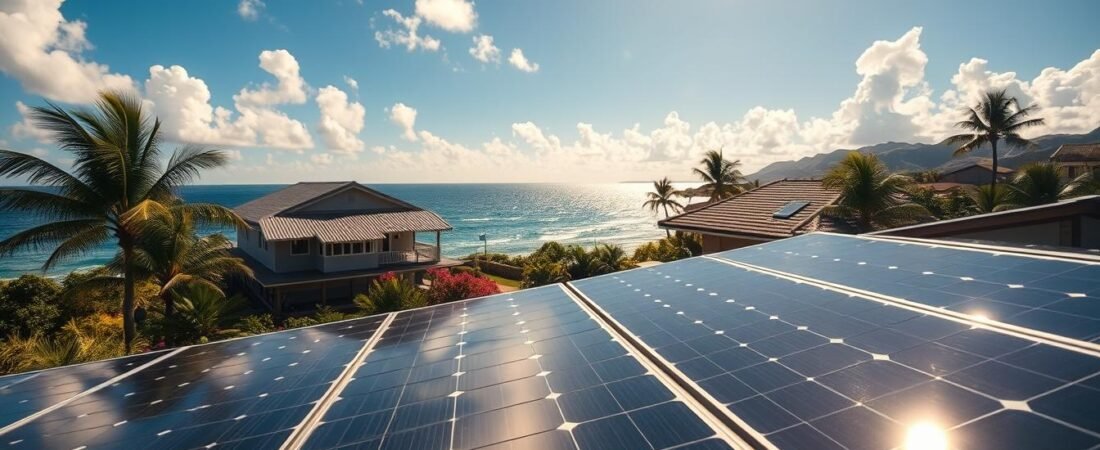
Thinking about a home energy upgrade? Many homeowners are shifting to a renewable system to lock in predictable energy costs for the next 25 to 30 years. This guide helps you weigh price, system size, and power output so you can make a smart investment.
Rising utility bills push people to seek alternatives that reduce monthly bills and add value to the roof. A typical solar panel system pays back over its lifetime and can steady your household electricity spending.
We break down the main factors that shape the final price: installation, system watt size, and installer quotes. You will learn how different companies present offers and how a cash purchase compares with financing.
By the end of this guide, you should feel ready to compare estimates and choose the right setup for your home. Picking the right equipment matters; Hawaii’s unique climate rewards smart choices with strong long-term returns.
Understanding the Solar Landscape in Hawaii
Hawaii’s electricity landscape makes rooftop generation an especially practical choice for many homeowners. High local rates and steady sun make on-site energy attractive for saving over time.
State goals and local benefits: The islands aim for 100% clean energy by 2045. That target drives supportive policies and growth in distributed generation. Many residents see a modern system as a path to more energy independence from the grid.
Year-round sunlight means panels reliably produce power to offset monthly electricity use. As adoption grows, grid upgrades and smarter interconnection rules help more homes host generation assets.
- Lower bills: Less dependence on expensive utility rates.
- Environmental gains: Reduced carbon footprint from home energy choices.
- Policy support: Incentives and rules favor wider deployment.
For a clear look at current incentives and how they affect an installation, see this Hawaii incentives guide.
Current Solar Panel Cost in Hawaii
Here’s a clear snapshot of what homeowners actually pay per watt and how system scale moves the final tally.
The average price sits at $3.34 per watt as of April 2026. That figure includes standard installation and helps buyers compare offers across companies.
Average Price Per Watt
Using the per watt metric makes quote comparison simple. Multiply $3.34 by the system watt size to estimate a total before incentives.
Impact of System Size
An 8.49 kW system typically totals about $28,356 before rebates. A smaller 5 kW array often runs near $16,700.
- Larger systems raise the upfront price but can deliver stronger long-term savings.
- Request multiple quotes to see how different installers price your installation.
| System Size | Per Watt | Estimated Total |
|---|---|---|
| 5 kW | $3.34 | $16,700 |
| 8.49 kW (avg) | $3.34 | $28,356 |
| Notes | Totals shown are pre-incentives; final prices vary by home and installer. | |
Key Factors Influencing Your Total Investment
A handful of practical factors account for most of the difference between low and high estimates from installers.
Equipment efficiency affects how many modules you need. Higher-efficiency units produce more power per square foot. That can cut the required system size on a tight roof and improve long-term energy yields.
Installation complexity drives labor and permitting fees. Steep roofs, shade issues, or multiple roof faces add time and price. Local installer rates and permit charges also show up on quotes.
- System size: Greater household usage needs a larger setup, so the total price rises with required wattage.
- Per watt: Use the per watt figure to compare offers, but include labor, hardware, and permit fees when you tally totals.
- Company quality: Reputable companies often charge more, yet they may deliver better warranties and workmanship.
- Battery addition: Storage raises upfront investment but adds resilience and can lower electricity bills over years.
Incentives and rebates can significantly lower your net outlay. Ask installers to itemize incentives on each quote so you see the true investment versus sticker price.
Leveraging Federal and State Tax Credits
Federal and local tax programs make a big dent in what you actually pay for a new system.
Federal benefit: The federal investment tax credit (ITC) offers a 30% credit on the value of your system. That reduces the sticker price and shortens payback time.
State bonus: Hawaii provides a 35% state tax credit on installation expenses, capped at $5,000. Combine both and you can save thousands.
Maximizing Your Savings
Plan carefully and file correctly. Claim the federal credit in the tax year after installation. Keep receipts and ask your installer to itemize eligible costs.
“Stacking incentives is the most reliable way to cut your net price and get more value from an installation.”
- Check for local rebates that stack with the federal credit.
- Work with a tax pro to handle paperwork and limits.
- Ask installers to show credits on every estimate so you see true out-of-pocket money required.
| Credit Type | Rate | Limit |
|---|---|---|
| Federal ITC | 30% | No cap (as applied to system value) |
| State Tax Credit | 35% | $5,000 |
| Local Rebates | Varies | Check local programs |
Comparing Solar Financing Options
How you fund a system affects upfront outlay, tax benefits, and lifetime returns.
Choosing the right path matters for monthly flow and long-term value. Below are common options and how they change ownership, who claims the tax credit, and total costs.
Cash Purchases
A cash purchase is often the most economical. You avoid interest and keep full ownership of the system.
You can claim the federal tax credit and any local incentives. That lowers your net price and speeds payback.
Solar Loans
Loans let homeowners install a system with little or no upfront payment. Interest raises the total over time, though monthly rates may still beat utility bills.
Leases and Power Purchase Agreements
Leases and PPAs let you use panels without owning them. Monthly payments replace upfront price, but owners of the equipment claim credits and incentives.
“Compare multiple quotes and the fine print. Terms can shape savings for decades.”
| Option | Ownership | Who Claims Credit | Typical Advantage |
|---|---|---|---|
| Cash | Owner | Homeowner | Best lifetime savings |
| Loan | Owner | Homeowner | Low upfront, pays over time |
| Lease/PPA | Company | Provider | Little to no upfront |
- Many companies offer tailored programs, such as GreenSun Hawaii, to match local rates.
- Always check how a payment choice affects installation, monthly costs, and long-term return.
The Role of Solar Batteries and Storage
Adding a home battery changes how and when you use the energy your system creates. It stores excess midday output so you can run lights and appliances after sunset or during outages.
Why homeowners choose storage: Batteries add upfront cost but offer backup power and help manage electricity use. Many island residents add storage to soften the impact of rising utility rates and keep the lights on during grid interruptions.
Smart design matters. Match battery size to your essential loads so critical appliances keep running. A right-sized system avoids under- or over-buying capacity.
- Use stored energy to cut high peak-time charges.
- Integrate storage to boost how well your panels perform over a day.
- Modern batteries are more dependable and common in new installations.
| Feature | Benefit | Typical Impact |
|---|---|---|
| Battery capacity (kWh) | Backup hours for essentials | Matches home size and needs |
| Integration | Smart load shifting | Lower peak electricity charges |
| Upfront cost | Higher initial outlay | Often lowers monthly bills over time |
“Storage turns midday generation into reliable household power.”
Selecting the Right Equipment for Your Roof
Start by matching product efficiency with your roof’s shape and exposure. Monocrystalline modules are the most common choice for residences because they deliver higher efficiency and strong durability.
Measure roof size and orientation to estimate how many panels will fit and the total watt output your system can produce. A careful layout helps you maximize usable space and boost long-term value.
Choose robust racking and mounting hardware to protect the roof and keep the array secure through weather events. Quality mounts reduce maintenance and protect your warranty for the next 25 years.
Because the islands see about 240 sunny days per year, efficient equipment yields strong annual generation. Work with your installer to pick a brand that balances price and longevity.
- Prioritize high-efficiency modules for limited roof area.
- Confirm mount compatibility with roof material and pitch.
- Plan wiring and inverter placement to minimize losses.
“Proper equipment selection keeps your installation productive and low-maintenance for decades.”
How to Evaluate Local Solar Installers
Choosing the right local installer shapes long-term performance and peace of mind for a home energy system.
Compare multiple quotes. With more than 75 companies operating locally, get at least three estimates to compare price and timelines.
Ask for a clear breakdown that lists equipment, labor, permitting, and admin fees. A reputable firm shows these numbers up front.
- Verify licensing and local installation experience.
- Read customer reviews and check Better Business Bureau ratings.
- Confirm warranties for both panels and workmanship.
Make sure they handle permits and incentives. A pro will file permits and guide you through available incentives to lower your net cost.
“Whether you opt for a cash purchase or financing, your installer should explain all contract terms before you sign.”
| Checklist | Why it matters | Action |
|---|---|---|
| Licensing | Protects your investment | Verify with state records |
| Warranties | Covers equipment and work | Request written terms |
| Quotes | Shows true price and savings | Compare 3+ offers |
Conclusion
Smart sizing, quality equipment, and the right financing are the three levers that make this upgrade pay off. Choose a properly sized system and reputable installers to get reliable power and long-term savings.
Take full advantage of the federal tax credit and local incentives to lower your upfront price. Comparing multiple quotes helps you see true value and avoid surprises during installation.
Whether you buy with cash or use financing, your new panels typically repay over several years and cut monthly electricity bills for decades. Start by using a tool to calculate solar ROI and map expected savings for your home.