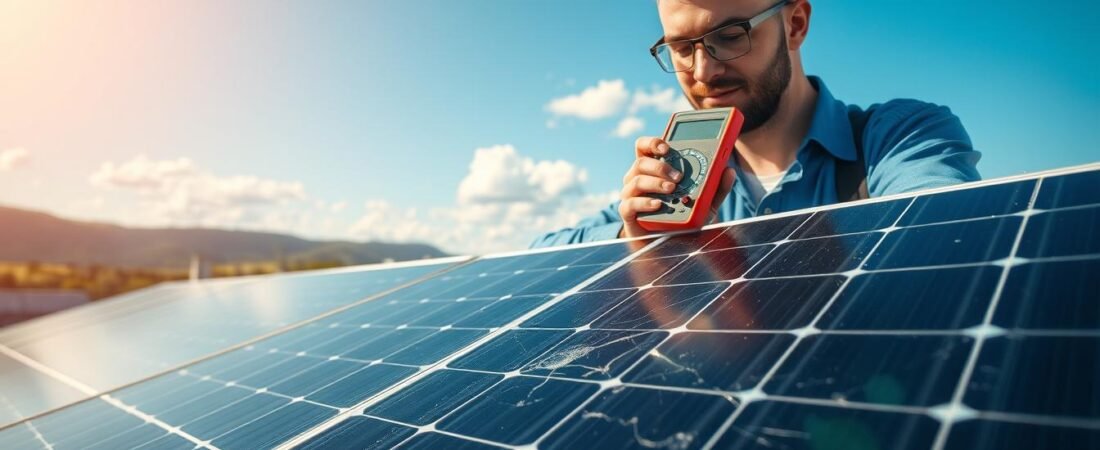
Solar panels can cut your electric bills and deliver clean energy for years. Homeowners often spot a cracked solar panel and worry about reduced output. This short guide shows clear steps to check and address damage to solar panels.
We focus on practical actions. You will learn how to spot common issues and decide if the system needs a simple fix or a pro visit. The goal is to protect your investment and keep panels working well.
What to expect: easy-to-follow steps, safety tips, and signs that mean you should call a technician. By acting promptly, you can limit damage and restore energy flow for your home.
Identifying Common Solar Panel Issues
Begin with an outdoor inspection to spot leaves, sap, or storm damage that affects performance. A quick look can reveal dirt, bird droppings, or hail impact on the glass surface. These factors block sunlight and lower system efficiency.
Debris and Environmental Factors
Debris like dust, pollen, and droppings can create hot spots and reduce output. Rain can wash some grime away, but sticky sap or heavy pollen needs careful cleaning.
Weather events — high winds, hail, and storms — add impact risk. Repeated thermal cycling also leads to microcracks in the glass over time, which slowly reduce performance.
Electrical and Wiring Problems
Often, electrical faults come from loose wiring or poor installation rather than a manufacturer defect. Test voltage and resistance to spot shorts and faulty connections.
“Faulty wiring is a common cause of sudden drops in electricity production—always check connections before assuming glass damage.”
- Check for debris build-up that shades cells.
- Inspect junction boxes and conduit for loose wires.
- Watch for microcracks after strong winds or pressure loads.
Tip: Review the common issues and solutions from the manufacturer before DIY work. Warranties may cover replacements for severe glass or internal damage.
Assessing the Extent of Your Solar Damage
Start by scanning each module from a safe vantage point to note visible glass flaws and surface wear. Take clear photos of any hairline lines, spidering marks, or chips to document the extent of the damage for warranty or insurance.
Visual checks help you judge whether issues are superficial microcracks or signs of deeper failure. Many solar panels keep producing power despite a cracked glass surface, but moisture ingress can lead to corrosion and internal faults over time.
Check output data next. Compare current production to past figures to see if performance or efficiency has dropped. Small losses often point to microcracks; steep declines suggest internal cell or junction box problems.
- Inspect the glass surface for severity and length of cracks.
- Note environmental factors like hail or thermal cycling that could cause worsening damage.
- Weigh the cost of repair versus replacement if major problems appear.
Essential Safety Precautions for Broken Solar Panel Repair
Safety first: always disconnect the inverter and open DC disconnects before touching any module. Confirm the array shows no voltage with a meter to remove the risk of electrical shock.
Protecting Yourself During Repairs
Personal protection matters. Wear heavy-duty, cut-resistant gloves and safety glasses when handling glass shards. Tempered glass can fragment into many sharp pieces.
- Use fall protection on your roof—harnesses and secure anchor points keep you safe while working at height.
- Cover the affected surface with an opaque tarp to stop the panels from generating electricity while you work.
- Work in a well-ventilated area if using sealants or resins to fix small cracks or seal glass edges.
- Never work alone; a partner helps move heavy modules and improves emergency response.
Following these steps protects your health and your system. Proper precautions make any home solar panel repair safer and more effective.
DIY Techniques for Sealing Microcracks
A careful DIY patch can slow water ingress and help maintain energy output after minor glass damage.
Start by cleaning the surface thoroughly with isopropyl alcohol and a lint-free cloth. Remove dust, pollen, and residue so adhesives bond well.
Using Polyurethane or Epoxy Resin
Spread a thin layer of polyurethane or epoxy over microcracks and smooth with a plastic spreader. Polyurethane needs at least 24 hours to cure; epoxy often follows a similar timeline.
Applying Silicone Encapsulant
Silicone encapsulants like QSil 216 form a flexible, rubber-like seal. Allow about 36 hours for full cure so the seal accommodates thermal expansion and keeps sunlight reaching the cells.
Sealing with Transparent Laminating Film
Apply a clear laminating film using a heat gun and a squeegee to remove bubbles. This film creates a waterproof barrier on the glass surface and helps keep water out of the system.
- Clean the glass surface before any application.
- Follow cure times: polyurethane 24+ hours, silicone 36+ hours.
- Use a squeegee and heat when applying laminating film for a bubble-free finish.
| Method | Cure Time | Best For |
|---|---|---|
| Polyurethane / Epoxy | 24+ hours | Durable seals on hairline cracks |
| Silicone Encapsulant | 36+ hours | Flexible seal allowing thermal movement |
| Transparent Laminating Film | Immediate set; bond completes after heat application | Quick waterproof barrier for surface cracks |
These methods are temporary solutions for minor cracks and help maintain performance and efficiency until you choose a permanent fix. For step-by-step guidance, see our detailed cracked solar panel guide.
When to Hire a Professional Solar Technician
If your array shows big power drops or shattered glass, a professional evaluation will save time and risk.
Hire a technician when you find shattered glass, major loss of electricity output, or any signs of internal wiring damage. These issues can lead to fire hazards or further system failure if handled incorrectly.
Costs vary. The average panel repair cost is about $750, though repairs can range from $120 to $3,000 depending on severity. A pro can tell you whether repairs or a full replacement is the smarter financial choice.
If you live near Poway, CA, look for local inspection services. A qualified tech will test performance, check installation and wiring, and assess weather or hail damage that may not be obvious from the roof.
- Call a pro for shattered glass, large power drops, or suspected internal faults.
- Get a professional estimate to compare panel repair cost vs. replacement.
- Hire a certified installer if possible to ensure safe, code-compliant work.
| Problem | Likely Action | Typical Cost Range |
|---|---|---|
| Shattered glass / visible break | Professional inspection and module replacement | $300 – $2,000 |
| Significant power loss | Diagnostic testing and targeted repairs | $120 – $1,200 |
| Wiring / junction box faults | Licensed electrician service | $150 – $800 |
“A qualified technician protects your investment and restores safe, efficient energy production.”
Strategies for Preventing Future System Damage
Create a proactive plan for cleaning and checks. A regular routine reduces the chance of debris buildup, hot spots, and glass surface issues.
Clean twice a year and after major storms. Typical maintenance costs run about $8–$25 per module, or roughly $500–$700 a year, which is far less than a full replacement.
Inspect the array after high winds, hail, or heavy storms. Look for loose wiring, mounting issues, or new cracks that need attention.
- Schedule a yearly professional inspection to test output and spot wiring or installation faults.
- Install wire guards to keep rodents from nesting under the panels and causing damage.
- Avoid cleaning in midday sun; cold water on hot glass can cause thermal stress and create new cracks.
- Review your homeowners policy with a Farm Bureau agent to confirm coverage for storm-related claims and potential solar panel repair.
“Small, consistent steps cut long‑term costs and help keep your system producing at peak efficiency.”
Takeaway: proactive maintenance and smart insurance review are the best ways to prevent costly repairs or replacement and to protect your solar investment.
Final Thoughts on Maintaining Your Solar Investment
Small, regular checks and timely cleaning save money and keep electricity flowing.
Maintain your solar panels with simple routines: rinse off dust, remove pollen, and dry areas where water pools. These steps cut the risk of glass damage and keep sunlight reaching cells.
Use quality equipment and a certified installer when possible. High‑grade gear like EcoFlow panels plus pro installation lowers the chance you need a major solar panel repair or full replacement.
DIY fixes help with minor issues, but always put safety first. If problems persist, contact the manufacturer or a licensed technician to weigh repairs versus replacement and to protect your home investment.
Final word: this guide gives practical solutions to common problems. Stay proactive with maintenance to preserve performance and efficiency for years.