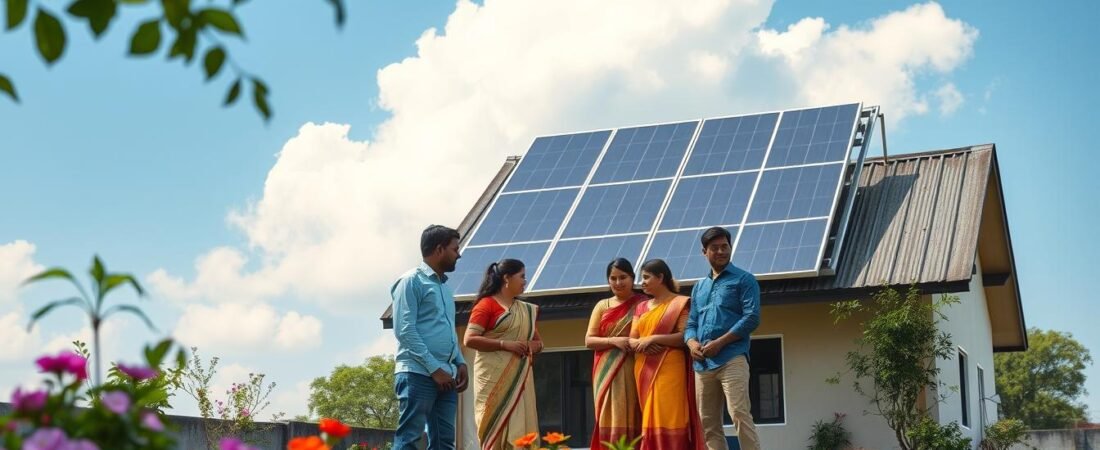
Thinking about clean energy? This short guide helps you learn the key numbers and choices when exploring a home solar setup. By 2026, typical installation runs between INR 1.5 lakh and INR 5 lakh, so understanding the breakdown matters.
Many homeowners aim to cut electricity bills and gain more control over power. Installing solar panels means you generate your own clean energy and reduce reliance on the grid. The long-term savings and benefits often outweigh the initial installation cost.
We’ll explain components, installation options, and what affects total costs. Whether you want a small system or something larger, this introduction sets the stage so you can plan a smart investment and protect your household from rising bills.
Understanding the Basics of Home Solar Systems
A simple home system turns sunlight into usable electricity, but knowing the parts helps you choose wisely.
Core Components of a Solar Array
Solar panels (photovoltaic modules) capture sunlight and make DC electricity. An inverter then converts DC to AC so appliances run normally.
Mounting structures and wiring hold the array in place and carry power to the breaker box. A properly installed mount keeps panels secure through storms and heat.
Types of Panels and Efficiency
Monocrystalline and polycrystalline are common. Mono PERC cells offer higher efficiency and are ideal where roof space is limited.
- High-efficiency panels yield more electricity per square foot.
- Inverter quality strongly affects overall system performance.
- Adding a battery stores extra energy for night use or outages.
“The overall efficiency of your setup depends on how well panels, inverter, and wiring work together.”
Investing in quality parts leads to better durability and steady power output over many years.
Key Factors Influencing the Price of Solar Panel for Home in India
The total spend depends mostly on system capacity, component quality, and installation complexity. System size, measured in kW, drives the bulk of the cost since larger homes need more panels to meet daily electricity needs.
Panel type matters. Monocrystalline units deliver higher efficiency and longer life but cost more than polycrystalline options. Choosing higher-efficiency parts can reduce roof space needs.
Installation complexity also affects final bills. Steep roofs, custom mounts, or tricky wiring increase labor and time. Location plays a role too—local labor rates and transport fees vary across regions.
- Pick the right capacity — 3 kW to 5 kW often suits a typical 3BHK.
- Invest in a quality inverter and sturdy mounts for long-term performance.
- Run an energy audit to size the system accurately and avoid extra costs.
Evaluate these factors to estimate total cost and reduce surprises during installation. Learn more about detailed market variables in this guide on factors that affect prices, or explore professional installation services to get a tailored quote.
Detailed Cost Breakdown for Residential Solar Installations
Breaking down each line item helps homeowners spot where money is spent and where real savings begin.
Average System Costs by Capacity
A 1 kW setup typically costs between INR 65,000 and INR 85,000 when all hardware and labor are included. The module itself usually ranges from INR 37,500 to INR 42,000 per kW depending on technology.
For larger homes, a 5 kW system often falls between INR 2.3 lakh and 2.5 lakh and delivers stronger long-term savings on electricity.
Inverter and Mounting Expenses
Inverters can account for a big share of total spend. Expect prices from INR 20,000 to INR 80,000 based on capacity and type.
Quality mounts and site prep add to durability and performance. Investing in sturdy hardware can increase upfront cost by 10% to 30% but reduces future maintenance.
Hidden Installation Charges
Watch for extra fees:
- Electrical upgrades like switchboard replacements.
- Roof repairs or specialized mounts for steep pitches.
- Complex wiring or long transport distances raising labor costs.
Tip: Choose a reputable installer and review an installation cost guide to avoid surprises and get the best value from your solar panel system.
Navigating Government Subsidies and Financial Incentives
Public rebates and state programs can make installing a rooftop system far more attainable. These incentives reduce upfront costs and speed up the payback period.
The central PM Surya Ghar Muft Bijli Yojana provides a direct subsidy of INR 30,000 per kW for systems up to 2 kW. This support is credited straight to the homeowner’s bank account, cutting the initial cash burden.
Many states add top-up subsidies. For example, Uttar Pradesh offers an extra INR 15,000 per kW. Combining central and state aid can lower the total cost substantially.
Central and State Level Support
- Direct subsidy: INR 30,000 per kW under the central scheme for small systems.
- State top-ups: Additional grants differ by region and can reduce remaining costs.
- National goals: Programs aimed to add over 10 GW of rooftop capacity by 2023 to expand renewable power nationwide.
“By taking advantage of these subsidies, homeowners can offset a large portion of installation costs and accelerate returns.”
Before applying, check eligibility with local authorities or the Ministry of New and Renewable Energy. Smart use of subsidy programs is a practical step toward making solar energy a viable option for more families.
Essential Roof and Site Preparation Requirements
A durable roof and clear site are the foundation for any effective rooftop solar array. Panels typically last 25 to 30 years, so planning now protects long-term performance and reduces future costs.
Start with a professional inspection. An installer will check for cracks, leaks, and structural issues. If your roof is older than ten years, plan repairs before installation to avoid extra work later.
Trim nearby trees and remove obstructions like water tanks. Shading cuts efficiency and lowers daily power output. Proper orientation matters too — a south-facing roof delivers the best year-round sunlight in most locations.
- Check structure: Ensure the roof can bear panels and mounts for decades.
- Measure area: Available roof space determines how many panels a system can host.
- Assess angle: Installers will pick tilt and direction to boost energy and efficiency.
“A well-prepared site not only lowers installation risks but also maximizes long-term electricity generation.”
The Step by Step Solar Installation Process
Start with a site survey: the installer maps roof space, shade patterns, and wiring routes. This defines the optimal system size and expected daily output.
Next comes design and approvals. Your installer finalizes the layout, secures permits, and applies for net metering with the utility. Net metering lets you export excess energy and cut monthly electricity bills.
Equipment procurement follows. Choose certified manufacturers for panels, inverters, and mounts to protect long-term performance and warranty terms.
During installation, the mount is fixed, panels are attached, and wiring connects the array to the inverter and main switchboard. A qualified electrician handles safety checks and grounding.
Finally, testing and commissioning confirm the system meets standards and the government or utility grants interconnection. The installer will also show you maintenance tips like annual cleaning to keep capacity high.
Tip: Good planning reduces unexpected costs and boosts performance, helping your household enjoy reliable clean energy sooner.
Conclusion
Start by mapping your household’s energy use to pick the right system size and capacity. This clear step helps you plan costs and expected savings.
Investment pays off: a well‑sized panel system with good parts and proper installation typically pays back in a few years and then cuts monthly electricity bills.
With government subsidy support and quality modules available, home solar has become more accessible. Proper roof prep and a trusted installer protect long‑term benefits and reduce maintenance costs.
Ready to act? Evaluate your needs, compare offers, and consult professionals to make solar a reliable, cost‑saving part of your home energy plan.