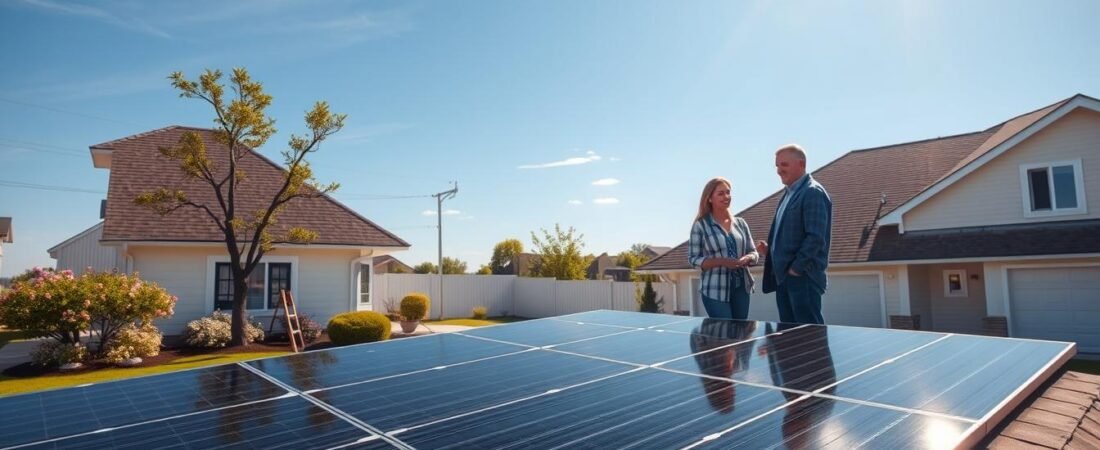
Facing high utility bills? Connecticut homeowners are exploring ways to cut costs and gain energy independence. This short guide walks you through practical choices for your home and helps simplify the most important options.
We explain how a residential system can lower monthly bills, boost property value, and provide reliable backup power with a battery or grid-tied setup. You’ll learn about financing, warranties, and common repairs in clear, plain language.
Want specifics on incentives and payback? Learn how property tax exemption, sales tax relief, and net metering affect costs and savings. For a deeper dive, see this helpful resource on whether going green makes sense in Connecticut: is solar worth it in CT.
Ready to evaluate options? This guide gives homeowners the facts to pick a provider, plan a roof-ready setup, and protect their long-term value.
Understanding the Connecticut Energy Landscape
With electricity hovering around 28.76 cents per kWh, Connecticut faces some of the nation’s highest rates. Homeowners are looking at renewable energy solutions to lower bills and gain control over home power costs.
State programs and incentives play a big role. The residential renewable energy solutions program helps customers reduce reliance on the utility grid. The net metering program lets you offset home consumption and may earn credits for excess generation.
Important savings come from tax breaks. The property tax exemption and sales tax exemption cut upfront costs and improve payback for a new energy system. These incentives make clean power options more affordable for residents.
Understanding local options is the first step toward a stable, cost-effective energy future. For professional assessments and local services, see our detailed energy services page.
Why Solar Panel Installation CT is a Smart Investment
When utility prices climb, investing in home energy systems can protect your household budget. Connecticut rates near 28.76 cents per kWh make energy alternatives more appealing to homeowners.
Rising Utility Rates
High electricity costs mean bills can swing upward with little warning. A reliable home system helps lock in lower monthly expenses and reduces exposure to the market.
Long Term Value
Durability matters. Quality equipment typically produces clean power for 25 years or more, so the upfront cost spreads across many years of savings.
Note: The 2025 Big Beautiful Bill removed the federal 30% tax credit for cash purchases, so choosing the right company and financing now affects long-term cost and value.
- With high utility rates, reducing grid dependence saves money over time.
- A long-lived system increases home value and appeals to buyers.
- Choosing experienced installers helps avoid extra costs and delays.
For a concise look at whether making the switch suits your home, read this quick guide: is it worth it in Connecticut.
Evaluating Your Home for Solar Potential
Start by checking your roof’s angle, shade, and daily use to see how well your home captures sun and converts it to usable power.
Roof orientation and condition matter. A south-facing roof usually produces the most output, but west and east roofs can work too.
Look for large trees, nearby buildings, or vents that cast shade. Shading lowers the efficiency of panels over the day.
A professional team will inspect load-bearing capacity and roof life. They confirm the surface can safely support a modern system and plan the layout.
“A good evaluation sizes the system to match real household use and available roof area.”
| Factor | What to check | Impact on output |
|---|---|---|
| Roof angle | Slope, orientation, age | High — affects annual generation |
| Shading | Trees, chimneys, nearby structures | Medium to High — reduces midday power |
| Energy use | Monthly kWh, peak hours | High — guides system size |
Tax credits and state incentives can change payback. A full evaluation helps you claim available benefits and size the system for future savings.
Choosing the Right Solar Equipment
Equipment selection affects output, reliability, and the long-term cost of your home energy system. Start by prioritizing efficiency, durability, and clear warranty terms before you sign any contract.
Panel Efficiency and Output
Select high-efficiency solar panels that offer at least 450 watts of rated output. That ensures more power per square foot and better performance on limited roof area.
Durability matters. Premium products commonly include lengthy guarantees, with many manufacturers offering 25–40 year warranty coverage to protect against defects and reduce future repairs.
Inverter and Battery Integration
A quality inverter and well-matched battery storage keep power flowing when grids falter. Look for proven inverter brands and batteries with clear cycle-life ratings.
- Match inverter capacity to array output to avoid losses.
- Choose battery systems that support your backup needs and long-term reliability.
- Confirm service terms for repairs and maintenance before purchase.
“Proper equipment and expert installation are the keys to maximizing output and minimizing long-term cost.”
Navigating the Residential Renewable Energy Solutions Program
Choosing the right RRES tariff can change payback timelines and improve long-term returns for your clean energy setup.
The program gives Connecticut homeowners two clear options for selling excess power back to the grid: the Buy-All tariff and the Netting tariff.
Buy-All pays you for every kilowatt-hour generated, while Netting offsets what you use with what you produce. Each option affects tax outcomes, projected savings, and years to break even.
- Compare estimated annual revenue under each tariff.
- Check how a battery changes dispatch and eligibility for credits.
- Factor in utility rules, interconnection, and application steps.
The program offers long-term stability: customers can recover installation costs and may earn payments over the next 20 years. Work with a pro to confirm your system and battery meet utility requirements and to secure the best incentives and financing terms.
“Professional guidance makes choosing between Buy-All and Netting straightforward and financially smart.”
Maximizing Savings with State Tax Exemptions
State tax breaks can cut upfront expenses and speed the payback on a home energy system. Connecticut offers benefits that make installing clean power more affordable for homeowners.
Sales tax relief is significant: the state provides a 100% sales tax exemption on qualifying equipment and related purchases. To use this benefit, you must give Form CERT-140 to your contractor when buying the gear.
Property Tax Benefits
The statewide property tax exemption prevents the added value of a new system from raising your annual property tax bill. That means upgrades improve home value without higher local taxes.
- Use Form CERT-140 at purchase to secure the sales tax exemption.
- The property tax exemption preserves your tax base after installation.
- These incentives lower the overall cost and shorten payback time.
“Maximizing available exemptions is one of the simplest ways to reduce the net cost of adopting clean power at home.”
Our team helps confirm eligibility and files required paperwork so you can focus on performance and savings rather than forms.
Exploring Financing and Leasing Options
If upfront cost feels like a barrier, flexible financing and leasing make system access realistic for most homes. Many homeowners start with no-money-down leases or low-interest loans to reduce immediate cost.
A trusted company will outline choices, including loans, leases, and power-purchase agreements. Each option affects monthly payments, tax eligibility, and long-term savings.
Buying your system often gives larger lifetime savings and uses available tax credits. Leasing or a PPA removes maintenance duties and offers a steady monthly charge instead of surprise repairs.
- Compare total cost over 10–25 years, not just monthly payments.
- Ask how warranties, service, and transfers work for homes and future buyers.
- Check whether tax incentives or rebates apply to your chosen plan.
“Choosing the right financing path lets you enjoy lower power bills with little upfront risk.”
Need help? We compare options side-by-side so you can pick the plan that fits your budget and energy goals.
The Role of Battery Storage in Your Energy Plan
A battery turns spare daytime output into reliable overnight electricity and backup when the grid fails.
Integrating a battery lets you store excess solar energy for use during the night or unexpected outages. This reduces reliance on the utility and smooths household power supply.
Many Connecticut homeowners add storage to their solar panels so they have dependable power when it matters most. We help customers pick the right capacity to meet each home’s needs and backup goals.
A thoughtful plan pairs battery size, inverter capacity, and usage patterns. That maximizes efficiency and makes the entire system more cost effective.
“Battery storage brings peace of mind and consistent power for your home year-round.”
| Benefit | What to expect | When to choose |
|---|---|---|
| Backup power | Hours of electricity during outages | Frequent outages or safety needs |
| Load shifting | Use stored energy at peak price times | High peak rates or time-of-use bills |
| System efficiency | Reduce export, increase self-consumption | Maximizing savings and grid independence |
Community Solar for Renters and Unsuitable Roofs
Community subscriptions let households tap into local renewable projects and cut monthly utility bills with no rooftop work.
Who benefits? Renters, owners with shaded or aged roofs, and anyone facing high upfront costs can join a nearby array. A provider manages the project, so you avoid maintenance and on-site installation.
How it works: You subscribe or buy a share of a community system. Your electric bill reflects credits for the generated power. That often means immediate savings compared to standard rates.
- No upfront cost and no on-site equipment to worry about.
- Access to connecticut solar incentives and typical financing options through the project provider.
- Flexible terms let you transfer credits if you move or change homes.
“Community projects make clean energy accessible when a roof won’t or you don’t own your home.”
Bottom line: Community offerings are a practical solution for people who want to lower bills, support local clean energy, and use available tax and program incentives without installing panels on their roof.
Real World Performance and Environmental Impact
Real-world data shows a typical 10 kW system can offset roughly 10 tons of CO2 each year, cutting a home’s footprint in a measurable way. This level of reduction helps communities meet local clean energy goals and improves air quality.
Consistent output: Modern panels deliver steady energy through the seasons. Even with shorter winter days, a well‑designed system keeps offering useful power and backup support when you need it most.
Longevity matters. Most systems are built to last for many years, preserving value and lowering operating costs over decades. A matched battery extends usefulness during outages and peak pricing windows.
- A 10 kW setup can power multiple homes’ daily needs and sharply cut household emissions.
- Tracking tools show performance, help spot issues, and prove real savings on bills and tax estimates.
- Reliable generation at home increases property value and long-term appeal to buyers.
“Monitoring your system turns data into dollars and helps protect your investment.”
Conclusion
,Moving toward renewable generation gives families predictable costs and more control over their electricity. For many homeowners, this choice improves resale value and lowers monthly energy expenses over time.
By using available state tax benefits and picking the right solar panels and battery, you can cut costs and boost reliability. Whether you buy or lease, work with a reputable company to ensure proper system design and timely installation.
Ready to act? Explore local options, compare quotes, and choose the plan that fits your home. Small steps now lead to long-term savings and a more resilient future for your family.