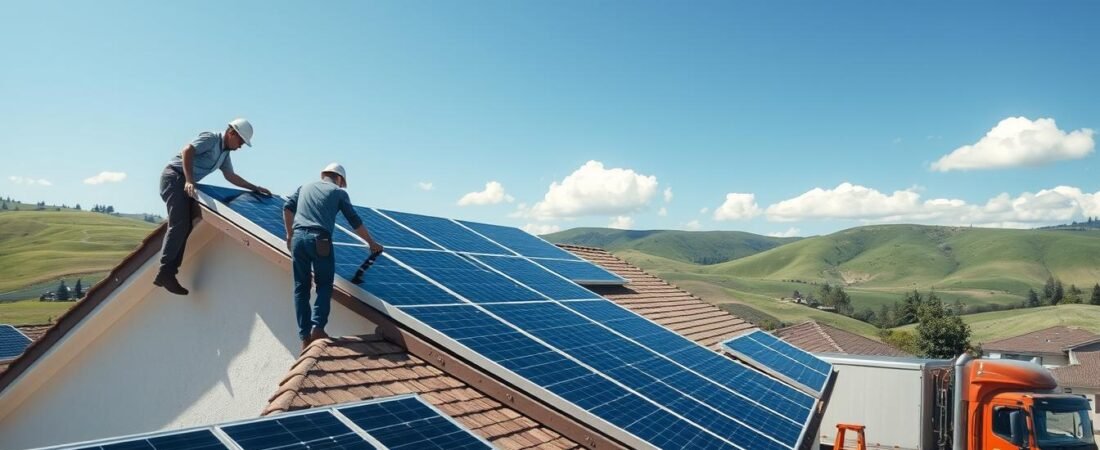
Planning a rooftop energy upgrade? This guide helps homeowners weigh local rules, weather patterns, and long-term value. Choosing the right team makes a big difference for performance and savings.
Modern solar panels resist coastal fog and heat, so your roof stays protected for many years. Leading brands like SunPower and Tesla offer proven systems and clear specs to compare.
Pick a company that includes a solid warranty and inspects your home for structural readiness. Experienced teams will size the system to match your power needs and roof layout.
Finally, check verified reviews and ask about cost per watt, installer credentials, and local customer experiences. The right partner can lower monthly bills and support a sustainable future for the community.
Understanding the Benefits of Solar Energy in the East Bay
Generating clean power at home gives residents more control over rising utility costs.
Local energy upgrades reduce reliance on traditional grids and cut monthly bills. Many homeowners in the bay area add panels on their roof to boost property value and hedge against rate hikes.
A reputable solar company will assess your roof and design a system that maximizes power output. Reading customer reviews helps you pick installers who offer solid warranty coverage and long-term support.
“Investing in clean energy often pays back through lower bills and stronger home resale value.”
- Lower cost per watt over the system’s lifespan
- Smaller carbon footprint and reliable power production
- Better home appeal and years of performance with good warranties
| Benefit | Short Term | Long Term |
|---|---|---|
| Monthly bills | Immediate reduction | Stable savings per watt |
| Home value | Positive buyer interest | Higher resale price |
| Support | Installer reviews guide choice | Warranty protects investment |
Assessing Your Home for Solar Panel Installation East Bay
Start your home assessment by mapping roof exposure and shade to estimate realistic energy yields.
Begin with Google’s Project Sunroof to get a fast, data-driven view of your roof capacity and likely savings. The tool factors in local weather, roof shape, and shading to estimate annual output.
Use the US Department of Energy’s Solar Estimate Calculator next. It gives a baseline cost per watt so you know expected cost before you contact any solar company.
- Have a pro inspect roof integrity so the structure supports panels for at least 25 years.
- Analyze shading patterns and roof pitch to size the system for maximum power.
- Compare companies that bundle equipment and panel installation with a strong warranty on both parts and labor.
Check customer reviews of local installers to learn who handles complex roofs and delivers reliable systems. This prep saves time and helps you choose the best solar option for your home in the bay area.
Financial Options and Incentives for Homeowners
Smart financing can cut upfront cost and boost the lifetime return on your renewable system.
Outright Purchase Benefits
Buying your system outright gives you full ownership and the best long-term return. Owning panels means free electricity after payback and the ability to claim incentives.
Most homeowners see value over 25+ years when a reputable company offers solid warranty coverage.
Leases and Power Purchase Agreements
Leases and PPAs let you go solar with little to no upfront cost. They reduce monthly bills and shift maintenance responsibility to the provider.
These options suit customers who prefer predictable payments over owning equipment and handling repairs.
Federal and State Tax Credits
The Residential Renewable Energy Tax Credit currently provides a 30% credit for qualifying photovoltaic and thermal systems.
The CSI-Thermal Program also offers rebates up to $2,719 for solar water heating on single-family homes.
- Check DSIRE for extra local incentives that lower cost per watt.
- Compare total savings, warranty terms, and company reviews before signing.
Navigating the Installation Process
Getting permits and lining up inspections are the two biggest administrative steps before crews climb onto your roof.
Permitting and Inspection Requirements
In many towns, permits clear the way for work and final interconnection. The City of San Leandro processes applications within 5 business days, which helps speed the timeline.
On installation day, the crew will attach racking, run wiring, and mount inverters before placing panels. A qualified installer protects the roof and follows local codes to keep your home intact for years.
Your chosen solar company handles most paperwork and schedules a town representative for the final inspection. That inspection is required to approve the system for grid connection and to verify safety.
Consider adding a battery backup for extra security. It boosts resilience but may slightly raise the total cost per watt.
- Confirm permits and expected timelines with companies you review.
- Ask about roof mounting methods and warranty coverage that lasts for years.
- Ensure the installer coordinates final inspection and interconnection approval.
Comparing Top Solar Companies and Installers
Side-by-side quotes reveal which companies deliver the best cost per watt and service.
Use the SmartSolar Marketplace to request multiple bids quickly. This tool shows vetted firms and helps you compare price, timeline, and promised warranties.
The Open PV Project from NREL offers real-world performance data. Reviewing that database helps you vet claims and see how systems perform over years in similar climates.
- Detailed list of past projects so you can inspect workmanship and longevity.
- Clear product warranties and separate labor guarantees.
- Experience with residential commercial solar work and local permitting.
| Criteria | Why it matters | What to ask |
|---|---|---|
| Cost per watt | Compares value across quotes | Ask for fully loaded per-watt price |
| Warranties | Protects performance for years | Request written warranty terms |
| Past projects | Shows real-world results | Request references and photos |
NRG Clean Power is one regional option to consider, but also review local companies bay area residents recommend. Compare reviews and verify installer credentials before signing.
Leveraging Local Resources and Programs
Using group purchasing models helps stretch your budget and brings vetted products to more roofs.
SunShares pools the buying power of nine counties to negotiate discounts on panels and battery storage. This group-buying model lowers the overall cost and connects homeowners with pre-screened installers.
Ava Community Energy runs the Resilient Home program. Homeowners can get free quotes and a $1,250 incentive toward qualified systems. That incentive can make a measurable difference in payback time.
The City of San Leandro is a SolSmart Community and keeps a list of approved contractors. Use that list when you vet companies and check reviews to confirm workmanship and warranty terms.
How local programs compare
| Program | Benefit | Typical Offer |
|---|---|---|
| SunShares | Volume discounts | Reduced per-watt cost, vetted installers |
| Ava Resilient Home | Direct incentive | $1,250 rebate + free quote |
| San Leandro SolSmart | Local contractor list | Approved contractors and resources |
Many trusted solar companies bay area residents use, including NRG Clean Power, join these programs to offer competitive pricing and extended warranty options. Explore local renewable programs through this local renewable programs page to find current offers and vetted contractors.
Conclusion
,Comparing warranties and per watt costs is the fastest way to spot the best long-term option for your home.
Investing in solar energy can cut monthly bills and raise resale value when you pick a trusted company. Use tools like the Solar Estimate Calculator and local programs to narrow choices.
Prioritize installers with strong reviews and a clear warranty. Check total cost per watt and available tax credits before you decide.
Whether you buy outright or sign a PPA, moving to solar power and solar roofing supports a cleaner, more independent energy future for bay area customers. Reach out to qualified companies and start the process today.