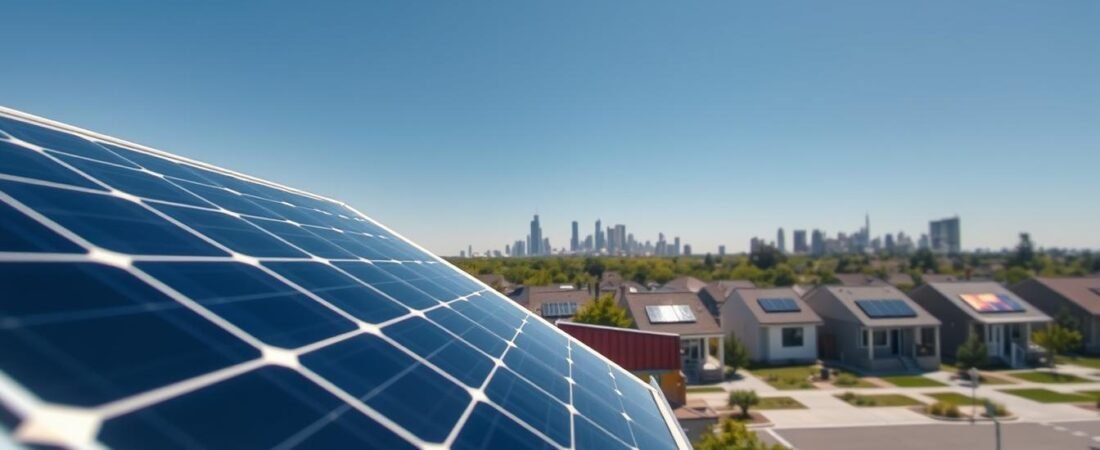
Deciding whether to add a rooftop system starts with clear numbers. As of April 2026, the average solar panel system in Cleveland, OH, is priced at $2.81 per watt including installation. That figure helps homeowners weigh upfront cost against long-term savings and rising electricity rates.
Our guide breaks down key factors like federal tax credit changes, local incentives, net metering, and how roof orientation affects production. We explain how to size a system for your home and estimate future bills so you can compare offers with confidence.
Read on to learn practical steps for evaluating installation, incentives, and long-term benefits. This intro gives you the snapshot you need before digging into detailed numbers and options.
Understanding the Current Solar Panel Cost Cleveland Market
A clear baseline helps planning. A typical 10.42 kW installation in the area averages about $29,310 before incentives. Prices vary by installer and equipment, often ranging from $24,914 to $33,706.
Comparing the average price per watt makes quotes easier to evaluate. Look at warranty length, inverter type, and expected lifetime output when reviewing bids.
Homeowners are researching installs to reduce rising electricity bills over time. Factors such as roof condition, system size, and module efficiency will affect final pricing and production.
Federal tax credits and state-level incentives can lower the upfront burden. Use these programs to improve payback time and long-term power savings.
| Metric | Value | Notes | Impact |
|---|---|---|---|
| Average price | $29,310 | 10.42 kW system | Baseline for quotes |
| Price range | $24,914–$33,706 | Depends on installer/equipment | Compare multiple bids |
| Key factors | Roof, size, module type | Affects production & longevity | Alters final investment |
| Incentives | Federal tax credits & rebates | Reduces upfront price | Improves payback |
Why Solar Energy Makes Sense for Cleveland Homeowners
Rising electricity bills are pushing more residents to consider on-site clean power. Generating energy at home can stabilize monthly spending and reduce reliance on the grid. That predictability is a major reason many are going solar.
Rising Electricity Rates
Ohio electricity prices rose about 31% from 2020 to 2024. That jump is a primary driver for homeowners considering going solar today.
A typical home system can offset a large portion of annual energy usage and shield your budget from future electricity rates hikes. Many find long-term savings outweigh the initial installation and price concerns.
Environmental Impact
Switching to clean energy cuts emissions and lowers your household footprint. For example, a 10 kW system can offset roughly 10 tons of CO2 each year.
Beyond savings, panels help communities meet clean energy goals. Federal tax and local incentives also improve the financial outlook for homeowners who decide that going solar is the right choice for their home.
- Offset energy usage and reduce utility bills.
- Lock in predictable power costs over time.
- Leverage federal tax and local incentives to improve payback.
Breaking Down the Total Investment for Your System
Start by totaling equipment, labor, permits, and any electrical upgrades to see the full investment.
A typical 10.42 kW solar panel system in Cleveland, OH, averages $29,310 before incentives. That figure covers modules, inverters, racking, wiring, mounting hardware, and installer labor.
Size is a key factor: larger systems need more panels and longer install hours. Review your average electricity bills to pick a system size that offsets home usage without oversizing the array.
Financing through loans is common and spreads the upfront cost while preserving savings from lower utility rates. Also include expected permit fees and any roof upgrades in your budget.
| Item | What it covers | Typical impact |
|---|---|---|
| Equipment | Modules, inverter, racking, wiring | Largest portion of price; affects long-term output |
| Labor & installation | Mounting, wiring, system commissioning | Varies by roof complexity; affects timeline |
| Permits & design | Plans, inspections, local fees | Required for safety and code compliance |
| Incentives & tax credit | Federal tax credit and local rebates | Reduces net price and shortens payback |
Work with licensed installers to ensure the panel system meets codes and maximizes power production. Investing in quality equipment and proper installation improves long-term savings and reliability.
Key Factors That Influence Your Final Price
Several practical variables drive what you’ll pay for a home system. Knowing these helps you compare offers and plan your budget with confidence.
System Size and Capacity
A smaller 5 kW system in Cleveland runs about $14,062, demonstrating how size changes the bill. Larger systems scale the materials and labor proportionally, so choosing the right system size is crucial.
Roof Versus Ground Mount
Mounting choice affects pricing. Ground-mounted arrays typically raise project price by 10% to 15% because of extra trenching and racking. A complex roof can also add labor hours and parts.
Battery Storage Additions
Adding battery storage increases your upfront investment but boosts resilience during outages and can improve long-term savings. Many homeowners combine batteries with incentives and a federal tax credit to lower the net price.
- Installers review your energy usage to recommend the optimal size.
- Roof pitch and material can add complexity and affect installation time.
- Proper planning helps balance upfront price with long-term savings and power reliability.
For a deeper look at local pricing and incentives, see our local pricing guide.
Navigating Available Financial Incentives and Rebates
Before signing any contract, map available incentives to see which lower your net investment. That simple step can reveal programs that reduce monthly payments or shorten payback.
Property Tax Abatements
Cleveland provides a property tax abatement that can exempt up to 100% of the increased home value from a rooftop installation. This keeps your property taxes from rising solely because you added a renewable energy system.
Low-Interest Loans and ECO-Link
The Ohio Treasurer’s ECO-Link program offers a 3% interest rate reduction on loans up to $50,000. That makes funding upgrades more accessible and lowers monthly payments for homeowners pursuing efficient home power solutions.
Net Metering and Tax Credits
Net metering lets you earn credit on your electricity bills for excess energy your panels export to the grid. While the federal tax credit structure has changed, state and local rebates still exist to reduce your overall price.
- Use local programs and low-rate loans to shrink upfront outlay.
- Combine net metering and credits to boost long-term savings.
- Always consult a tax professional to confirm eligibility for specific incentives before you finalize installation.
Exploring Financing Options for Your Installation
Financing choices shape how soon your rooftop system starts saving you money. Many homeowners use low‑interest loans or $0‑down offers to begin saving on electricity immediately.
The ECO‑Link program offers practical terms: 5‑year loans up to $25,000 and 7‑year loans up to $50,000. Pick the term that matches your budget and the expected lifespan of the system.
When comparing options, factor in interest versus a cash purchase. Higher rates can extend the payback period and reduce net savings even if monthly payments look low.
| Loan Type | Term | Max Amount | Best for |
|---|---|---|---|
| ECO‑Link | 5 or 7 years | $25,000 / $50,000 | Medium installs; lower interest |
| $0‑down loan | Varies | Depends on lender | Start saving on electricity now |
| Cash purchase | N/A | N/A | Max long‑term savings |
| Home equity loan | 5–15 years | Varies | Larger system size or storage |
Get accurate quotes so your chosen system size matches loan needs. Work with a reputable lender to confirm tax credit eligibility and clear loan terms.
Comparing Ownership Models Versus Leasing Agreements
Deciding between owning your system and signing a lease shapes both short‑term bills and long‑term value. This choice affects who handles upkeep, who gets incentives, and how your monthly power spending looks.
Understanding Power Purchase Agreements
A Power Purchase Agreement (PPA) lets you pay for the energy produced at a set rate, often with no upfront fee. A PPA shifts installation and maintenance to the provider.
This can suit homeowners who want lower immediate payments and predictable per‑kWh rates without owning equipment.
Benefits of Leasing
Leases and some programs, like Palmetto’s LightReach, offer monthly payments starting as low as $99 for many medium homes. Leasing removes maintenance duties, since the provider monitors and repairs the array.
- Ownership gives you control, possible tax credit benefits, and added resale value.
- Leasing reduces upfront spend and simplifies upkeep for busy homeowners.
- Both options cut reliance on traditional energy suppliers and lock in steadier monthly bills.
| Model | Upfront | Maintenance | Incentives |
|---|---|---|---|
| Ownership | Higher | Owner | Eligible |
| Lease / PPA | Low or None | Provider | Provider |
Compare offers carefully to pick the path that matches your financial goals and desire for system control.
How to Select the Right Installer for Your Project
A trusted installer can mean the difference between steady savings and repeated repairs. Choose a company with local track record and verified credentials to protect your home and investment.
Look for verified experience. Firms like YellowLite have earned industry recognition over many years. Castle Energy, LLC offers full‑service support in Northeast Ohio and can manage design through grid connection.
Impact on Home Resale Value
Quality installation boosts resale appeal. A well‑installed system increases property value, minimizes buyer concerns, and documents reliable performance for appraisers.
- Request multiple quotes to compare warranties and timelines.
- Confirm installers handle permits, inspections, and utility interconnection.
- Ask about guidance for power purchase agreements versus direct purchase.
| Installer Trait | Why It Matters | What to Ask | Expected Outcome |
|---|---|---|---|
| Credentials & Awards | Shows proven track record | Licenses, industry lists, references | Fewer surprises, reliable workmanship |
| Full‑service support | Handles design, permits, grid tie | Scope: design, permitting, interconnection | Smoother install and faster activation |
| Warranty & Service | Protects long‑term savings | Length and coverage details | Lower maintenance risk, better resale |
| Financing & Advice | Helps optimize tax & incentive use | Options: loans, PPA, rebates | Improved net savings and clarity |
Long-Term Financial Benefits and Property Value
A reliable on-site generation setup offers steady savings and a measurable lift to a home’s market price.
Beyond monthly bill relief, a quality system can boost resale appeal and financial resilience for long-term owners.
Impact on Home Resale Value
Studies show homes with installed panels sell for about 4.1% more than similar properties without them. That premium often offsets part of the upfront cost and makes listings stand out.
- Over 25 years, Cleveland homeowners can save roughly $32,449 on electricity by generating their own clean energy.
- Net metering credits and property tax abatements protect long-term value and shorten payback.
- A properly sized system delivers consistent power, which appeals to buyers and lowers operating expenses.
| Benefit | Financial Impact | How it Helps Resale |
|---|---|---|
| Increased property value | ≈ 4.1% price premium | Makes home more competitive |
| Lifetime savings | ≈ $32,449 over 25 years | Lower bills boost buyer appeal |
| Net metering & abatements | Reduces effective upfront cost | Improves long-term ROI |
| Right system size | Maximizes production | Attracts efficiency-minded buyers |
Bottom line: For many homeowners, adding a reliable solar panel system is an investment in both current savings and future resale value. To compare local offers and verify expected returns, review our local pricing guide.
Conclusion
A custom quote that factors in your usage and roof specifics reveals the real value of a home energy upgrade. This shows how long-term savings, local rebates, and the federal tax credit affect your bottom line.
Whether you buy or lease a panel system, incentives and smart sizing make efficient electricity more reachable for most homeowners. Compare offers to see how panels and financing shape your net outcome.
Take the next step: get tailored estimates, review installer warranties, and weigh ownership versus lease. With the right approach, you can secure reliable power, boost home value, and enjoy lasting savings.