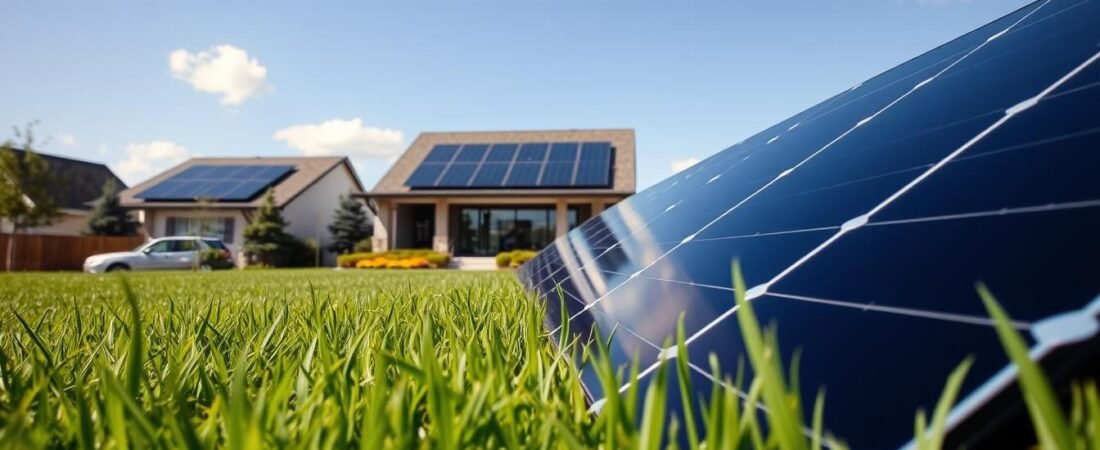
Michigan homeowners pay 19.29 cents per kWh, well above the U.S. average. That higher rate makes investing in a home energy system worth a close look.
This short guide explains total solar cost and what drives prices in the state. It breaks down incentives, equipment choices, and financing so you can weigh long-term savings.
We cover practical topics like production estimates, utility bill reductions, and how tax credits affect net price. You’ll learn which factors change installation and equipment expenses over the years.
Whether you plan to buy, lease, or explore a loan, this buyer’s guide helps homeowners compare companies and programs. For more detailed numbers on regional pricing and system examples, see the full breakdown on solar panel cost MI.
Understanding the Solar Landscape in Michigan
With electricity up about 19% since 2020 and roughly 170 sunny days per year, Michigan presents a unique energy picture. These trends push more homeowners to explore michigan solar options while weighing weather and grid realities.
What matters locally:
- Rising utility rates make clean energy attractive for long-term savings.
- Lower-than-average household usage means smaller solar panels can meet many needs.
- Modern panels still produce meaningful power on cloudy days.
- Aging utility infrastructure often raises costs for local customers.
Choose experienced companies to assess roof orientation, shading, and expected output. A good on-site review shows how a system will perform for your home and helps forecast real savings.
Bottom line: Michigan’s mix of higher electricity prices and modest sunshine favors smart design. Proper placement and the right panels can cut dependence on the grid and lower long-term costs.
Breaking Down the Average Solar Panel Cost MI
Knowing typical prices and system size makes comparing offers much easier for Michigan property owners.
System Size Requirements
A typical home in the state often needs about 7 kW to offset standard usage. That size matches local weather and average electricity demand.
Review recent energy bills to confirm your home’s needs. A quick bill analysis shows how many kilowatt-hours you use each month.
Calculating Net Investment
Expect an all-in price near $25,340 before incentives. At roughly $3.19 per watt, equipment and labor form most of the upfront fee.
- Average system capacity: 7 kW — often enough for a typical home.
- Price per watt: about $3.19/W — used to estimate total project pricing.
- Financing options like a loan help spread payments over several years.
- Federal credits and local rebates can cut the net investment significantly.
Tip: Ask companies for a detailed quote that lists installation, equipment, and expected production so you avoid surprises.
Comparing Michigan Energy Rates to National Averages
Compare your current bill to projected system savings to see if buying a home energy setup makes sense for you.
In 2024 Michigan residents paid about 19.3 cents per kWh, versus the U.S. average of 16.5 cents. That gap and a 19% rise since 2020 make a clear financial case for on-site generation.
Why it matters: Higher electricity prices raise the break-even point for installations, but they also speed up payback when a system offsets utility purchases.
“Generating your own power can shield household budgets from volatile rate spikes.”
- Modern panels and inverters work well on cloudy days, improving real-world savings.
- Comparing your kWh use to projected output shows how quickly customers recoup their price.
- Reliable EIA data confirms Michigan pays more for electricity than most states.
Federal and State Solar Incentives
A blend of federal credits and Michigan rules makes adopting clean energy more affordable for many homeowners. Read the details so you can plan the true net investment for a home system.
Federal Tax Credit Benefits
The federal tax credit lets you deduct a large share of your qualified investment from your federal taxes. This credit applies to both equipment and installation and is a key part of reducing upfront costs.
Property Tax Exemptions
Michigan offers a 100% property tax exemption for the added value from a clean energy system. That means your annual property tax bill does not rise because of the system’s added home value.
Sales Tax Savings
Most equipment used to install solar is exempt from the state’s 6% sales tax. That exemption cuts the purchase price of modules, inverters, and related equipment.
- Combine credits and exemptions to speed payback and increase long-term savings.
- The property tax break is automatic in most cases, easing paperwork for homeowners.
- Work with your installer to document expenses so you can claim federal and state benefits.
“These incentives make clean energy investments much more accessible for average households.”
Impact of Local Utility Rebates
Local utility rebates can shave thousands off a home energy project when stacked with state incentives. Two programs stand out for Michigan homeowners.
The Lansing Board of Water & Light offers a generous rebate of $500 per kW. That help lowers upfront price and shortens payback for many properties.
DTE Energy runs the Solar Currents program, which provides an upfront rebate of $2.40 per watt for qualifying systems. This program often makes a bigger difference on larger installs.
These utility-specific incentives work with state tax breaks to improve long-term savings. Important: many programs require certain equipment and documentation. Talk to your installer early so your equipment meets rebate rules.
How to claim rebates:
- Confirm eligibility with your utility before you sign contracts.
- Collect invoices and equipment spec sheets during installation.
- Submit applications promptly; some programs have limited funds or deadlines.
“Utility rebates often change the project math—plan for them to maximize savings.”
For a full list of local offers and guidance, check regional solar rebates and incentives in Michigan.
How Weather Patterns Influence System Efficiency
Michigan’s shifting weather changes how much power a rooftop array can produce across the year.
Cold, cloud cover, and snow all affect annual production. Michigan averages about 170 sunny days, so design choices matter for steady energy output.
Managing Snow Accumulation
Snow can block panels and reduce energy for days or weeks. Modern module surfaces and steeper tilt angles help snow slide off naturally.
If snow does cover a panel field, use a soft roof broom from the ground or hire a pro. Avoid scraping or climbing without training.
- Many homeowners slightly oversize their system to offset winter losses.
- Cold temperatures often improve module efficiency if modules stay clear of snow.
- Proper installation and tilt maximize annual production and long-term savings.
| Factor | Impact | Action |
|---|---|---|
| Sunny days (avg) | 170 days — moderate | Use high-efficiency modules |
| Snow cover | Reduces production temporarily | Clear with roof broom or oversize system |
| Cold temps | Can boost efficiency | Maintain clear panels for best results |
“Plan for seasonal swings so you set realistic expectations for annual electricity savings.”
The Role of Solar Batteries in Energy Independence
A home battery can turn midday surplus into reliable backup power when the grid goes down.
Michigan has some of the highest outage rates per capita, so stored electricity becomes a valuable asset for many households.
Battery systems capture excess generation from your solar panels during bright hours. That stored power runs critical loads at night or during storms.
Adding storage boosts energy independence and reduces reliance on expensive utility power. Many program offers now include incentives to offset the extra investment.
- Backup protection: Batteries supply essential power during outages.
- Load shifting: Use stored power when rates are high to maximize savings.
- Reliability: Proper installation ensures safe, long-lasting performance.
“For many Michigan homeowners, the peace of mind from a battery is worth the added investment.”
Work with experienced installers to size the system and claim any available incentives. A well-chosen battery can make your panels and system far more resilient and useful year-round.
Evaluating Different Solar Financing Options
Choosing how to pay for a home energy setup shapes your long-term savings and monthly budget.
Cash Purchases vs Loans
Cash purchases deliver the fastest payback and the largest lifetime savings because you own the system from day one and avoid interest.
Solar loans, by contrast, let homeowners avoid high upfront price while still qualifying for the federal tax credit. Many loan plans offer zero down and fixed monthly payments.
Leasing and Power Purchase Agreements
Leases transfer maintenance and ownership risk to the provider, but they usually yield lower total savings than buying. PPAs let you buy produced power at a set rate, which can be simple but less flexible.
- Pick cash if you want maximum savings and immediate ownership.
- Choose a loan to spread payments and keep tax benefits.
- A lease or PPA suits renters or those avoiding ownership, but expect lower returns.
| Option | Ownership | Typical Benefit |
|---|---|---|
| Cash | Yes | Highest lifetime savings |
| Loan | Yes | Low upfront, tax credits apply |
| Lease/PPA | No | Minimal maintenance, lower returns |
“Match your finance choice to your budget, tax situation, and how long you plan to stay in the home.”
Essential Equipment and Installation Fees
Budgeting for both hardware and administrative fees makes the true project price transparent.
The total system cost covers more than just the panels and modules. Expect inverters, mounting racks, wiring, and safety devices to appear on the invoice.
Installation fees include labor and the admin work to pull building permits and pass safety inspections. In Michigan, permit and inspection charges typically run from $25 to $400.
You should also plan for an interconnection application fee—usually about $100—so the utility can authorize grid connection safely.
Choose reputable companies that handle paperwork and ensure equipment meets local codes. That reduces delays and protects your home.
- What to expect: hardware, labor, permits, interconnection, and paperwork fees.
- Why it matters: accurate budgeting avoids surprises and speeds installation.
- Tip: get an itemized quote showing equipment and installation line items before you sign.
“A clear, detailed quote is the best way to protect your savings and time.”
Maintenance Expectations for Michigan Homeowners
A little attention once or twice a year goes a long way toward steady production.
Most arrays are set it and forget it. They need only occasional cleaning and a visual check to keep delivering clean energy. Natural rain and snow in Michigan often rinse away dust and light debris.
Long Term Warranty Protection
Manufacturer protection plans commonly run about 25 years. That coverage typically includes performance guarantees and limited equipment repair or replacement.
Schedule annual or biennial professional inspections to catch loose wiring, roof issues, or inverter alerts early. Doing so preserves production and avoids unexpected repair bills.
- Cleaning: Wipe away heavy dirt or bird droppings if production dips noticeably.
- Snow clearance: Use a soft roof broom or wait for melt—avoid climbing without training.
- Inspections: Hire a certified company every 1–2 years for system health checks.
| Item | Typical Interval | Why it Matters |
|---|---|---|
| Visual check | Annually | Catches physical damage and loose mounts |
| Professional inspection | Every 1–2 years | Ensures wiring and inverters work and maintains warranty |
| Cleaning | As needed (1–2 times/year) | Maximizes production after heavy dust or debris |
| Snow management | Seasonal | Prevents prolonged shading and lost power |
“A well-maintained system with a solid warranty is a low-risk way to lock in long-term savings.”
Selecting the Right Solar Installer
Finding an installer who knows Michigan rules helps you claim every available solar incentives and avoid delays with permits or interconnection. With about 84 companies operating statewide, research matters.
Start local: compare at least three quotes to balance equipment quality, installation timelines, and projected savings.
- Check BBB ratings and customer reviews to verify service and workmanship.
- Ask if the company handles permits, interconnection, and tax paperwork for incentives.
- Confirm experience with similar roof types, racking, and equipment in Michigan conditions.
Have installers explain expected energy production and how the system ties to your electricity rates. A clear, itemized quote should list equipment, labor, and any fees so you can compare real costs.
“Pick a partner who explains long-term savings and stands behind warranty and service.”
Ask these quick questions: licensing and insurance, years of local experience, warranty details, references, and whether they will submit rebate or program paperwork. The right company finishes work safely, on time, and within budget.
Conclusion
, Switching your home to locally generated energy can trim bills and boost resilience against outages. Using federal and state solar incentives helps lower the upfront cost and makes the project more affordable for many Michigan homeowners.
Pick financing that fits your budget and work with a qualified installer to secure permits, rebates, and tax benefits. With the right equipment and basic upkeep, a well-sized system delivers reliable clean energy and long-term savings for your home.
Next step: review quotes, confirm available programs, and choose a trusted company to move forward. This guide gives the facts you need to decide with confidence.