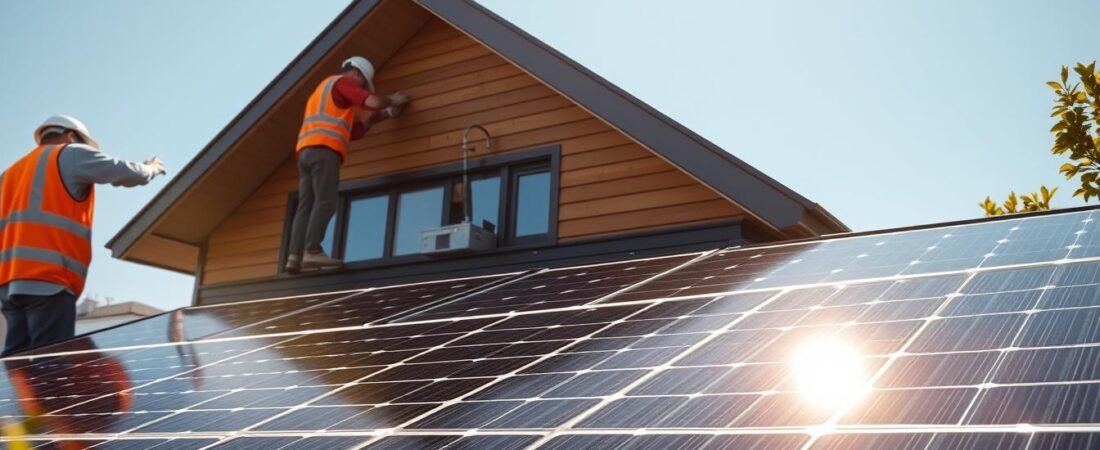
Moving to a home powered by renewable energy can change daily life. Lakisha Harris did just that when she moved into a solar-equipped home in Accokeek, Maryland, through the Department of Energy’s Summer of Solar program. The DOE has invested heavily to make this source more affordable for Americans.
This short guide introduces the components you need to install solar panels on your roof or ground area. You will learn about the inverter, wiring, battery storage, and the exact equipment amount to run your energy system every day.
By choosing to install solar, you can cut electricity bills and gain more independence from the utility grid. We also cover costs, system size, financing options, and how many panels may fit your area.
Ready to get practical steps and tools? See our step-by-step DIY resources for permit tips and pre-install checks at DIY solar installation guide.
Understanding the Fundamentals of Solar Energy
At the core of every rooftop system is a simple science that turns sunlight into usable electricity.
How Solar Panels Work
Sunlight strikes silicon cells and excites electrons. That movement creates a direct current that forms the basis of your energy system.
The inverter then converts that DC into alternating current your home uses. This step is essential for safe, usable electricity.
Types of Solar Power Systems
There are three common system types. Each meets different needs and budgets.
- Grid-tied: connects to the utility and can send excess power back.
- Hybrid: adds batteries for backup and better load management.
- Off-grid: operates independently, ideal for remote sites.
“Understanding how energy flows through each component helps you pick the best setup for daily needs.”
| System Type | Best For | Storage | Grid Connection |
|---|---|---|---|
| Grid-tied | Lower cost, net metering | Optional | Yes |
| Hybrid | Backup and savings | Integrated | Yes |
| Off-grid | Remote or self-sufficient | Required | No |
Next step: Use this guide to match the right system to your home’s power needs and goals.
Assessing Your Property for Solar Potential
Begin with a property survey to measure sun exposure, roof condition, and total usable space for an array.
Check that your roof faces south or has a clear southern exposure. Aim for at least 265 square feet of unobstructed area to support most small arrays.
Inspect shading from trees or nearby buildings. Even small shadows can cut energy output by a large margin. Verify the roof structure can carry extra weight and that it will not need replacement within 25 years.
- Confirm local utility rules and any incentives that affect net metering and permits.
- Plan panel orientation so no permanent structures block peak sun hours.
- Record measurements and photos to share with your installer or contractor.
| Check | Why it matters | Minimum | Action |
|---|---|---|---|
| Orientation | Maximizes daily energy | South-facing preferred | Measure roof azimuth |
| Clear area | Needed for array size | ≥265 sq ft | Map usable roof area |
| Structural | Supports long-term load | Good for 25+ years | Get a roof inspection |
Proper assessment cuts surprises and helps you plan a reliable system that meets your home energy goals.
Calculating Your Energy Needs and System Size
Start by sizing your system to match actual monthly electricity use, not guesswork.
Determining the Right Number of Panels
Gather three months of utility bills and find your average monthly kilowatt-hours (kWh). Divide that number by peak sun hours for your area, then divide by typical panel output in kW to get a rough count.
Rule of thumb: a 6 kW residential array usually uses about 15–19 solar panels and costs roughly $18,180 before tax credits. That size often trims bills by about $125 per month and can save around $10,500 versus a turn-key option.
Plan two hours of work per panel when estimating labor. Use a solar calculator to refine size for larger homes and to avoid oversizing. Consider financing options—cash, loans, or leases—to spread costs while your energy system begins saving money.
Accurate estimates reduce surprises and help match system size to real needs.
Navigating Permits and Utility Requirements
Secure approvals early. Before you install solar, contact your local Authority Having Jurisdiction (AHJ) to learn which permits apply. This step ensures your project meets building and safety codes.
If you live in an HOA community, get their written sign-off on your design. Many associations require formal approval before work begins. Missing this can lead to costly rework or delays.
Your utility will review the electrical wiring diagram to confirm safe interconnection and net metering eligibility. Accurate schematics and certification documents speed the review and help avoid hold-ups.
“Proper documentation and early utility coordination reduce surprises and let your energy system start offsetting electricity bills sooner.”
- File permits with the AHJ and keep copies of approvals.
- Submit HOA forms and any required community waivers.
- Provide your utility with wiring diagrams and interconnection paperwork.
| Requirement | Who Reviews | Typical Time | Typical Cost |
|---|---|---|---|
| Building permit | AHJ | 1–4 weeks | $100–$500 |
| HOA approval | Homeowner’s Association | 2–6 weeks | $0–$250 |
| Utility interconnection | Utility company | 2–8 weeks | $50–$300 |
Plan for these costs and timelines as part of your financing and project schedule. Meeting all requirements helps your system operate safely and lets your home begin saving on electricity sooner.
Essential Tools and Safety Equipment for Solar Panel Installation in House Projects
Before you lift a module onto the roof, gather the right tools and safety gear for the job.
Good prep saves time and lowers risk. Use a full-body harness with a lanyard for fall protection. Add slip-resistant safety shoes and heavy-duty gloves when handling heavy panels.
Required Hand and Power Tools
Bring a power drill, a circular saw, and quality mounting wrenches. A sturdy ladder and torque wrench speed racking and make mounts secure.
Personal Protective Equipment
Wear safety glasses while drilling to shield your eyes from debris. Keep a Class C fire extinguisher on site for electrical emergencies.
- Charge battery packs and extension cords before starting to avoid work delays.
- Choose tools for ground-mounted versus rooftop systems based on your location and array size.
| Item | Purpose | When to Use |
|---|---|---|
| Harness & lanyard | Fall protection | Any work on the roof |
| Power drill & saw | Mounting and racking | During mechanical assembly |
| Safety glasses & gloves | Personal protection | Drilling and handling panels |
| Fire extinguisher | Electrical fire safety | On-site during wiring |
Tip: Inspect gear before each shift. Proper tools and PPE keep your project safer and lower long-term costs.
Installing the Racking and Mounting System
Start by securing a strong mounting foundation. A well-built rack protects your investment and keeps the array aligned for decades.
For roof-mounted setups, locate rafters and mark them with a chalk line. Bolt flashings to the rafters to create a watertight anchor for the rails.
Ground-mounted systems need a metal foundation. Dig holes at least 18 inches deep and pour concrete footings to anchor the support posts.
Once footings or flashings cure, bolt the racking rails to create a level plane for the panels. Use a torque wrench to secure fasteners and check alignment often.
- The racking holds the entire array steady against wind and weather.
- Properly installed rails reduce roof stress and extend system life.
- Careful layout now prevents leaks and uneven wear later.
Correct racking work is critical to the safety of your home and the longevity of your energy system.
Mounting Solar Panels and Inverter Setup
Secure mounting and a well-placed inverter make the difference between a reliable array and recurring maintenance headaches.
Start with a clear plan for racking and device placement. Use end clamps on the first and last modules and mid clamps to bind the array tight. Tight clamps keep panels aligned and reduce wind lift.
Best Practices for Inverter Placement
String inverters perform best when wall-mounted in an accessible, shaded spot on the side of your home. This location makes wiring simpler and maintenance faster.
Microinverters must be attached directly to the frame before you fasten each panel to the rails. That step prevents hard-to-reach wiring after the array is set.
- Always complete wiring connections before bolting modules to the rails; once mounted, access is limited.
- Place the inverter near the array to shorten DC runs and cut energy loss.
- Keep panels level and angled for the best daily energy yield.
“The inverter is the heart of your system, converting DC from panels into AC power for your home.”
Managing Battery Storage and System Wiring
A clear plan for battery location and cable runs prevents delays and keeps the system safe.
Start with site prep. Pick a spot that meets ventilation, weight support, and access rules.
Wire AC and DC circuits per your planset. Connect the inverter to a junction box, add a PV disconnect switch, then terminate at the breaker.
Ground every AC and DC conductor. Proper grounding protects people and equipment and is required by code.
- Follow the battery maker’s manual; battery type changes steps and safety needs.
- Route wiring so the array, inverter, and battery act as one cohesive energy system.
- Label disconnects and leave clear access for service.
Commissioning is the last step. Verify the battery talks to the monitoring software and that charge/discharge rules work for peak and off-peak times.
“With correct wiring and commissioning, your home can keep power during utility outages.”
| Step | Action | Why it matters |
|---|---|---|
| Site prep | Check ventilation, weight, access | Safety and longevity of batteries |
| Wiring | Inverter → junction box → disconnect → breaker | Ensures safe power flow and code compliance |
| Commissioning | Test communication with monitor | Optimizes energy flow and backup readiness |
Finalizing Inspections and System Activation
Finish strong by booking the required inspections and preparing the system for official activation. These final steps protect safety and unlock permission to operate.
Scheduling the Inspection
Contact your local building department to set an inspection. Most utilities accept that report; only about 10% of projects need a separate onsite utility review.
Tip: Make all equipment and ladders accessible so the inspector can review wiring, mounts, and the inverter quickly.
Setting Up Monitoring Software
Install monitoring tools to track the amount of energy your panels produce. The software flags drops in output that often point to debris, inverter faults, or wiring issues.
“A working monitor turns data into timely alerts so you catch problems before they cost you.”
- Pass inspection → request permission to operate (PTO) from your utility.
- Check the dashboard weekly during the first month.
- Keep modules clean to avoid lost production and higher bills.
| Step | Who | Outcome |
|---|---|---|
| Local inspection | Building department | Code compliance verified |
| PTO request | Utility company | Official activation |
| Monitoring setup | Owner / installer | Real-time alerts and reporting |
For an inspection checklist, see inspection checklist. To hire local help for setup, check local installer services.
Conclusion
This guide gives you a clear path to assess needs, pick equipment, and move toward a working solar panel setup that fits your property. Use the checklist and budgeting tips here to plan smartly.
Follow permits, safety steps, and financing options to install solar and match the system to your energy needs. Proper planning cuts delays and helps protect value. Remember federal credits and local incentives when you calculate total cost.
Create a durable, efficient array that lowers bills and boosts home value. With good preparation, renewable energy becomes a long-term benefit for your family and community. Start today and keep momentum toward clean power for your home.