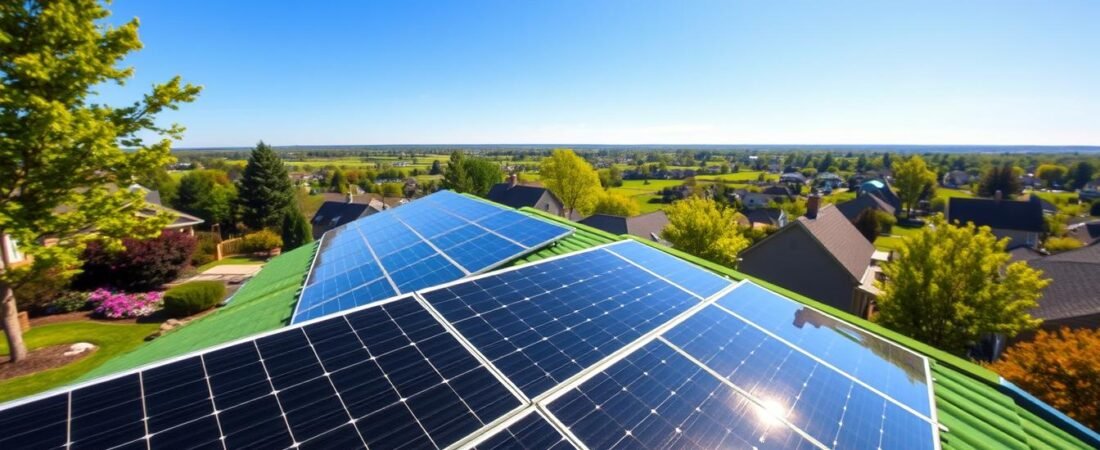
Understanding the true price of a home solar setup starts with a clear benchmark. As of April 2026, the average solar system runs about $2.59 per watt including installation. That figure helps homeowners compare quotes and plan for long-term savings.
Most homeowners see solid returns over a 25- to 30-year lifetime. Locking in predictable energy expenses now can shield your household from rising utility bills later.
Installation costs are often offset by lower bills and available incentives. To check current market prices and detailed breakouts by system size, visit EnergySage’s Maryland pricing guide.
Researching installers, roof suitability, and local rebates will help make your investment efficient and cost-effective. Read on to learn how to compare companies and estimate real savings over time.
Understanding the Solar Panel Cost in Maryland
A reliable price-per-watt number turns vague estimates into actionable budget targets.
Current Market Averages
Average system size: 14.11 kW, a common residential array that matches typical household usage.
Typical price: $36,587 before incentives, using an average of $2.59 per watt for installation.
Price Ranges for Typical Systems
Market quotes vary by installer and equipment. Typical totals fall between $31,099 and $42,075 for a 14.11 kW system.
- Compare multiple companies to find the best match for your roof and energy goals.
- Size the system to cover your electricity needs; that drives most of the price variance.
- Incentives and financing can lower upfront money and improve long-term savings.
| Metric | Value | Notes |
|---|---|---|
| Average size | 14.11 kW | Typical for Maryland homes |
| Typical pre-incentive price | $36,587 | Based on April 2026 market data |
| Price range | $31,099 – $42,075 | Depends on installers and equipment |
How System Size Impacts Your Total Investment
System size largely determines how much you’ll pay upfront and how much energy you can generate.
A 5 kW system is a common starting point. In Maryland a typical 5 kW array runs about $12,966 installed. Doubling the size to 10 kW roughly doubles the total costs, so a 10 kW array will be near twice that price.
Larger systems give more energy and can cut a household’s monthly bill faster. But your roof limits how many panels you can mount. Most projects are custom, so the final price depends on roof shape and household demand.
- Panels are priced per watt, so totals scale linearly as size grows.
- Bulk pricing can lower the per-watt figure for larger systems, though the overall investment is higher.
| System Size | Installed Price | Notes |
|---|---|---|
| 5 kW | $12,966 | Typical starter system for many homes |
| 10 kW | $25,932 | Approximate double of 5 kW; more annual energy |
| 14.11 kW | $36,587 | Matches average household usage and quoted market data |
Plan your size by comparing expected savings, available roof area, and available incentives. That helps make the investment work for your home and long-term energy goals.
Key Factors That Influence Installation Pricing
Several local variables directly shape what you’ll pay to add a home renewable system. These elements affect labor, hardware needs, and long-term performance. Understanding them helps when you compare quotes from companies.
Equipment Quality
Higher-efficiency modules and premium inverters cost more up front. They usually produce more power per square foot and may reduce system size over the years.
Roof Characteristics
Roof type, slope, and material change mounting methods and labor time.
Ground-mounted arrays or carports require more materials and work, so they raise installation costs compared with roof-mounted setups.
Shading and Weather
Shade from trees or nearby structures can force a larger system to meet your energy goals.
Local weather patterns influence annual output, so installers may size systems differently to hit target production over the years.
| Factor | How it affects price | Action to take |
|---|---|---|
| Equipment quality | Higher price, better output | Balance efficiency with budget |
| Roof type | Mounting complexity raises labor | Ask installers about mounting methods |
| Shading & weather | May require more panels or optimizers | Get a shading analysis and production estimate |
Navigating Federal and State Solar Incentives
Smart use of available incentives reduces what you pay at installation and lowers long-term net costs.
The federal tax credit lets homeowners claim 30% of an installed solar system as a tax credit. This credit applies to the total qualified installation price and can cut your out-of-pocket amount significantly.
Local programs add extra savings. The Maryland Solar Access Program may offer grants of $750 per kW for eligible households that meet income rules. These grants stack well with the federal credit.
Use these tips to maximize savings:
- Claim the 30% federal tax credit after installation.
- Check eligibility for state grants and local rebates.
- Ask your installer for a post-incentive net price estimate.
| Incentive | What it covers | Typical benefit |
|---|---|---|
| Federal tax credit | 30% of installed system | Reduces overall cost by 30% |
| State grant (Solar Access) | $750 per kW for eligible owners | Direct money back at time of project |
| Net metering | Credits for excess power sent to grid | Lowers monthly electricity bills |
Plan with a tax pro to confirm how credits apply to your return and to time the paperwork for maximum savings.
Comparing Cash Purchases Versus Financing Options
Deciding how to pay for an at-home renewable system shapes your savings for years to come.
Paying cash removes interest and maximizes long-term savings over a 25-year life span. A cash purchase also simplifies paperwork for the federal tax credit and keeps ownership benefits with the homeowner.
Leasing and Power Purchase Agreements
Financing with a loan often offers $0-down choices. You start saving on electricity day one, though interest reduces lifetime returns.
Leases and PPAs provide immediate savings with no upfront money. Providers sometimes pass the federal tax credit benefit to customers, lowering monthly payments.
- Cash purchase: biggest long-term savings; no interest.
- Loan financing: $0 down possible; pay interest but save immediately.
- Lease/PPA: minimal upfront money; provider handles installation and incentives.
Tip: Compare total cost of ownership—cash vs. loan vs. lease—over the system’s expected years. Include incentives, tax effects, and net metering credits to pick the best path for your household budget.
The Role of Net Metering and Energy Credits
Net metering lets your utility credit you when your system sends excess power to the grid. Those credits are usually at the retail rate, so exported electricity directly offsets what you buy later.
Maryland homeowners can also earn Solar Renewable Energy Credits (SRECs). Each SREC represents about 1,000 kWh of generation and can be sold or traded. That creates extra cash across the years and reduces the effective price of your installation.
- Net metering acts like free storage by turning the grid into a virtual battery.
- SRECs provide a secondary income stream for every 1,000 kWh your panels produce.
- Credits and retail compensation help offset system costs and shorten payback.
Tip: Use monitoring software to watch production and SREC accrual. That helps you maximize incentives, manage tax filings, and plan cash flow over the life of the system.
Long-Term Maintenance and Lifecycle Considerations
Routine checks and simple upkeep keep a rooftop energy system working reliably for decades.
Durability is the rule. Most units have no moving parts, so rain and time handle much cleaning. Manufacturers commonly warranty panels for 25 to 30 years, while inverters often cover 12 to 25 years.
Snow rarely needs manual removal. Panels warm and shed snow as the sun rises, restoring energy flow without action from the homeowner.
“Choose quality parts and schedule yearly checks to keep production steady and avoid surprise repairs.”
- Small issues: certified teams can quickly diagnose wiring or production faults.
- Warranties: they protect your investment and lower unexpected repair costs.
- Component choice: high-grade equipment reduces upkeep and extends useful life.
| Item | Typical Warranty | Maintenance Need |
|---|---|---|
| Panels | 25–30 years | Occasional cleaning; visual inspections |
| Inverter | 12–25 years | Monitor output; replace per warranty term |
| Roof-mounted system | Depends on hardware | Check mounts and wiring annually |
Selecting the Right Solar Installer for Your Home
Choosing the right installer shapes how smoothly your project unfolds from permit to production.
Start local and check track records. Look at Nova Solar, Palmetto Energy, IntegrateSun, Lumina Solar, and Ipsun Solar for proven work across the state. Local firms often handle permits faster and offer hands-on service.
Get at least three bids. Comparing quotes can lower the final price by as much as 20% versus using a single company.
Vetting matters. Ask for references, proof of licensing, and warranty details. Confirm the installer is certified and screened to meet safety and performance rules.
- Prefer companies with clear timelines and written guarantees.
- Choose teams that inspect your roof and explain how they will avoid damage.
- Weigh local, family-owned outfits against national firms for service style and follow-up.
| Company | Strength | Local Experience |
|---|---|---|
| Nova Solar | Residential expertise | High |
| Lumina Solar | Quality installs & service | High |
| Ipsun Solar | Fast permitting | Medium |
“Vet teams carefully so your system delivers reliable savings and few surprises.”
Evaluating the Return on Your Solar Investment
A typical homeowner in the state recoups their outlay in under a decade while enjoying decades of lower utility bills.
Over 25 years, Maryland homeowners average $72,805 in electricity savings. That figure shows how an upfront installation can turn into steady financial gain.
The average payback period is about 9.76 years. After that point, most generation produces net savings that add up quickly.
Key drivers of return:
- Federal tax credit that covers 30% of the qualified installation lowers your net price immediately.
- Net metering credits reduce or eliminate monthly electricity bills by valuing exported energy.
- Choosing the best equipment and vetted installers protects performance and long-term money saved.
| Metric | Value | Why it matters |
|---|---|---|
| Average 25-year savings | $72,805 | Shows lifetime financial benefit |
| Average payback | 9.76 years | Time until net positive cash flow |
| Federal tax credit | 30% of installation | Immediately reduces net investment |
“Combine smart equipment choices, reliable installers, and available credits to maximize lifetime savings.”
Conclusion
, Sound planning and vetted installers make this upgrade a lasting financial win for homeowners.
Take action thoughtfully. A clear estimate of the cost solar panels helps set realistic expectations. Use available incentives and the federal tax credit to lower upfront expenses.
Treat the project as an investment that delivers long-term savings for 25–30 years. Compare multiple bids, check warranties, and pick quality components to protect performance.
Ready to learn more? Meet our team for guidance on credits, tax filing tips, and a personalized estimate to start your path toward savings.