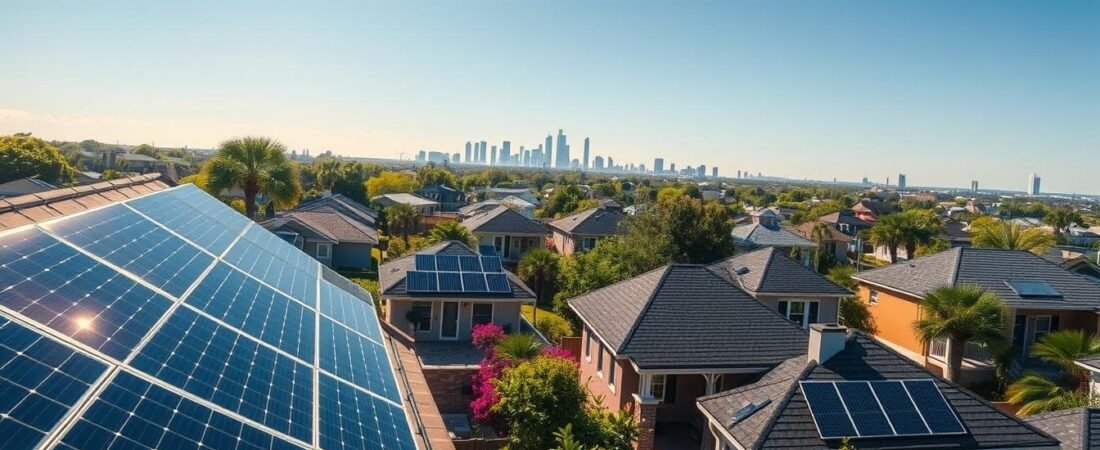
Thinking about a switch to rooftop energy? Rising utility bills in the area are pushing many homeowners to explore panels and systems that lock in predictable electricity rates. As of April 2026 the average system price is about $2.63/W installed, a useful benchmark when you compare quotes.
Choosing the right system size and financing matters. A cash purchase, a solar loan, or available tax credits and incentives can change your long-term savings. Local companies will assess your roof, sunlight and usage to give clear quotes.
This guide walks you through the key factors—installation, net metering, watt output, and expected years of service—so you can weigh the investment and potential power savings. Start by gathering quotes and checking local policies to make a confident choice.
Understanding Solar Panel Cost New Orleans
Understanding what drives your installation price helps you plan a smarter investment.
The average rate in April 2026 sits at $2.63 per watt, installed. That figure helps when you compare bids and check financing options.
For an 11.94 kW system, typical totals run from $26,700 to $36,124, with a midpoint near $31,412 before incentives and tax credits.
- Totals include labor, equipment and permits.
- Paying cash often gives the best lifetime value; a loan spreads upfront outlay.
- Get multiple quotes from local companies to compare price and warranty.
| Metric | Measure | Low | High |
|---|---|---|---|
| Average price per watt | $/W installed | $2.63 | $2.63 |
| 11.94 kW system total | Project price | $26,700 | $36,124 |
| Typical midpoint | Before incentives | $31,412 | |
Tip: Quality of panels, roof complexity, and local rates affect final price. Review warranties and expected years of production when you evaluate savings.
Average Pricing and System Size Requirements
Knowing how price scales with system size helps you pick the right setup for your roof. Use a per-watt benchmark to compare offers from different solar panel installation companies fairly.
Cost Per Watt Explained
Per-watt pricing standardizes bids so you can judge equipment, labor and permits on an equal footing. For example, a typical 5 kW setup in New Orleans runs about $13,152.
Impact of System Size
Doubling capacity roughly doubles the total price, so a 10 kW project is about twice a 5 kW figure. The average system size locally sits near 11.94 kW, so many homeowners plan totals around that scale.
- Larger systems need more roof space and higher upfront cash or loan payments.
- Final eligibility for tax credit and other incentives depends on the total installation price.
- Net metering rules and your electricity use patterns help determine how much system size makes sense.
Financial Benefits and Long-Term Savings
Investing now can lock in decades of lower utility bills and steady savings. Homeowners in the area typically save an average of $26,684 over a 25-year period. That figure reflects reduced monthly electricity bills and the value of generating your own power.
Incentives and the federal tax credit cut the net price of installation and improve your return on investment. Paying with cash avoids interest and increases total savings versus taking a loan.
Many companies offer free consultations to estimate savings based on roof orientation and sunlight. A well-designed system also acts as a hedge against inflation, keeping energy rates predictable over the years.
- Average savings: $26,684 over 25 years.
- Monthly relief: Lower electricity bills and stable rates.
- Better returns: Cash payment and incentives boost net savings.
Evaluating Your Home for Solar Potential
A realistic site assessment helps match system size to your household’s electricity needs.
Roof Orientation and Shading
South-facing roof surfaces usually give the best sunlight for panels. East- or west-facing sections can work too, but they produce less peak output.
Shading from trees or nearby buildings lowers annual production. Have a professional inspect any frequent shade to avoid surprises during installation.
Electricity Consumption Benchmarks
Gather a year of bills to see how much electricity your home uses each month. That helps determine the right system size and projected savings over the years.
Many companies model expected output against your usage to suggest a balanced system that meets demand without oversizing.
Sunlight Availability
Louisiana averages about 216 sunny days per year, which means good potential for consistent energy generation.
Also check roof pitch and structural integrity so installation goes smoothly and your investment lasts through the expected years of service.
- Tip: Ask for a site report and production estimate with your quotes.
Navigating Local Incentives and Tax Credits
Local incentives and tax credits can cut your upfront investment and speed payback timelines.
The federal tax credit remains a powerful tool. You can claim a percentage of eligible installation expenses, which lowers the net price of a solar system.
Louisiana also offers local benefits, like property tax exemptions that protect home value from higher assessed totals after upgrades.
Net metering rules vary by utility. Some providers run buyback programs that credit your electricity account for excess power you feed back to the grid.
Know the difference between a tax credit and a rebate. A credit reduces your federal tax bill. A rebate returns part of the purchase directly or via the utility.
- Check updates: Incentives change, and verification with your utility prevents surprises.
- Get help: Many companies assist with paperwork so you don’t miss credits or rebates.
- Maximize savings: Combining federal and local programs shortens the payback and boosts long-term returns.
| Incentive | Who offers it | Impact | Action |
|---|---|---|---|
| Federal tax credit | IRS | Reduces federal tax liability by a percentage | Claim on your tax return |
| Property tax exemption | State/Parish | Prevents higher home assessments after upgrades | Apply with local assessor |
| Net metering / buyback | Local utility | Credits excess generation to your account | Confirm policy with utility |
Financing Options for Your Installation
Financing choices determine whether you own the equipment or simply pay for the power it produces.
Paying cash buys immediate ownership and maximizes long-term savings. It also ensures you can claim the federal tax credit and raise your home’s value.
Comparing Loans and Leases
A solar loan spreads payment over time and can yield monthly totals lower than your current electricity bill. Many companies offer flexible loan terms to match household budgets.
Leases and PPAs require little or no money down. They often reduce upfront risk, but they limit tax credit eligibility and long-term savings.
- Cash purchase: Best lifetime savings and tax credit access.
- Loan: Ownership with monthly payments; read the fine print for total interest.
- Lease/PPA: Low upfront cost; fewer financial benefits over years.
| Option | Ownership | Tax Credit | Best for |
|---|---|---|---|
| Cash | Yes | Eligible | Max savings, no interest |
| Loan | Yes | Eligible | Spread payments, own system |
| Lease / PPA | No | Not eligible | Low upfront, minimal maintenance |
Selecting Reputable Solar Companies
Picking a reputable installer is the single best way to protect your investment and avoid headaches.
Look for firms with a clear track record. Solar Alternatives Inc. has served the Gulf Coast for 16 years and often shows completed projects and client references.
Griffin Electric LLC, based in Hammond, LA, is another approved installer with local experience. Both names are worth considering when you request quotes.
Verify reviews and ask for recent job photos, warranty details, and production estimates for your system. This helps you compare apples to apples.
- Get multiple quotes to find competitive pricing and service options that help you save money.
- Choose companies that disclose equipment specs and expected energy production.
- Avoid firms that push aggressive leases or PPAs; ownership usually gives better long-term savings.
The best installers will manage permits, inspections, and final connection while explaining incentives and timelines. Work with vetted companies for reliable service and peace of mind.
Potential Risks and Market Considerations
Assess regulatory trends and climate threats now to protect your rooftop investment later.
Net metering rules vary by utility, so pay close attention to buyback rates in your area. A weak buyback rate reduces how quickly a system pays back, and it can change if policy shifts.
Net Metering and Buyback Policies
Confirm policies with your provider before signing. Some homeowners add battery storage to offset low buybacks and hold extra energy for outages.
Weather and Climate Resilience
Modern solar panels are built to resist high winds and humidity when attached correctly. Still, choose equipment rated for local storms and ask installers about mounting and warranties.
| Risk | Impact | Mitigation |
|---|---|---|
| Policy change | Lower buyback or incentive loss | Model returns with conservative rates; claim tax credit when eligible |
| Severe weather | Physical damage or reduced output | Use wind-rated panels and experienced installers |
| Low buyback | Less value for exported energy | Install battery storage; size system for on-site use |
Tip: Work with reputable solar companies that know local rules and how to secure panels to roofs. For community planning context, see the regional resilience report.
Conclusion
Smart planning and local expertise turn an energy upgrade into steady household savings. Evaluate your roof, compare quotes from trusted solar companies, and weigh financing to get the right system for your needs.
Claim the federal tax credit and other solar incentives to reduce upfront expense. Check net metering rules with your utility, since buyback rates can change how fast you save money.
Choose installers with clear warranties and production estimates. Multiple quotes help you find the best solar option and a smooth panel installation.
Start today by researching local teams and asking for site reports. With good planning, you can enjoy cleaner energy and reliable savings for decades.